20 Bathroom Vanity Ideas to Transform Your Space in 2026
Published: 07/16/2026
Choosing the right bathroom vanity is one of the fastest ways to change how an entire bathroom looks and functions, whether you’re working with a cramped apartment powder room or planning a full primary bath remodel. The vanity anchors the room’s style, provides essential storage, and sets the tone for every other finish around it, from tile to lighting. Because vanities come in so many sizes, materials, and price points, there’s a workable option whether you’re renting and need something reversible, renovating on a tight budget, or building out a dream primary suite. This guide walks through twenty bathroom vanity ideas covering different styles, budgets, and space requirements, followed by practical planning tips, real cost ranges, a materials comparison, maintenance advice, and answers to the most common vanity questions.
Is a New Bathroom Vanity Right for You?
Before diving into styles, it helps to weigh the practical tradeoffs. A vanity update can range from a simple weekend swap to a multi-week plumbing project, so matching the scope to your budget, space, and timeline matters.
Pros
• Immediately updates the look and feel of the entire bathroom
• Adds usable storage and counter space in most cases
• Can be scaled to almost any budget, from a $150 stock cabinet to a $5,000+ custom build
• Improves resale value when styled with broad, timeless appeal
Cons
• Plumbing relocation adds significant labour cost if the new vanity changes the sink position
• Smaller bathrooms limit width and storage options
• Natural materials like marble, wood, and concrete require ongoing maintenance
• Custom or semi-custom vanities can take several weeks to arrive
1. Floating Wall-Mounted Vanity
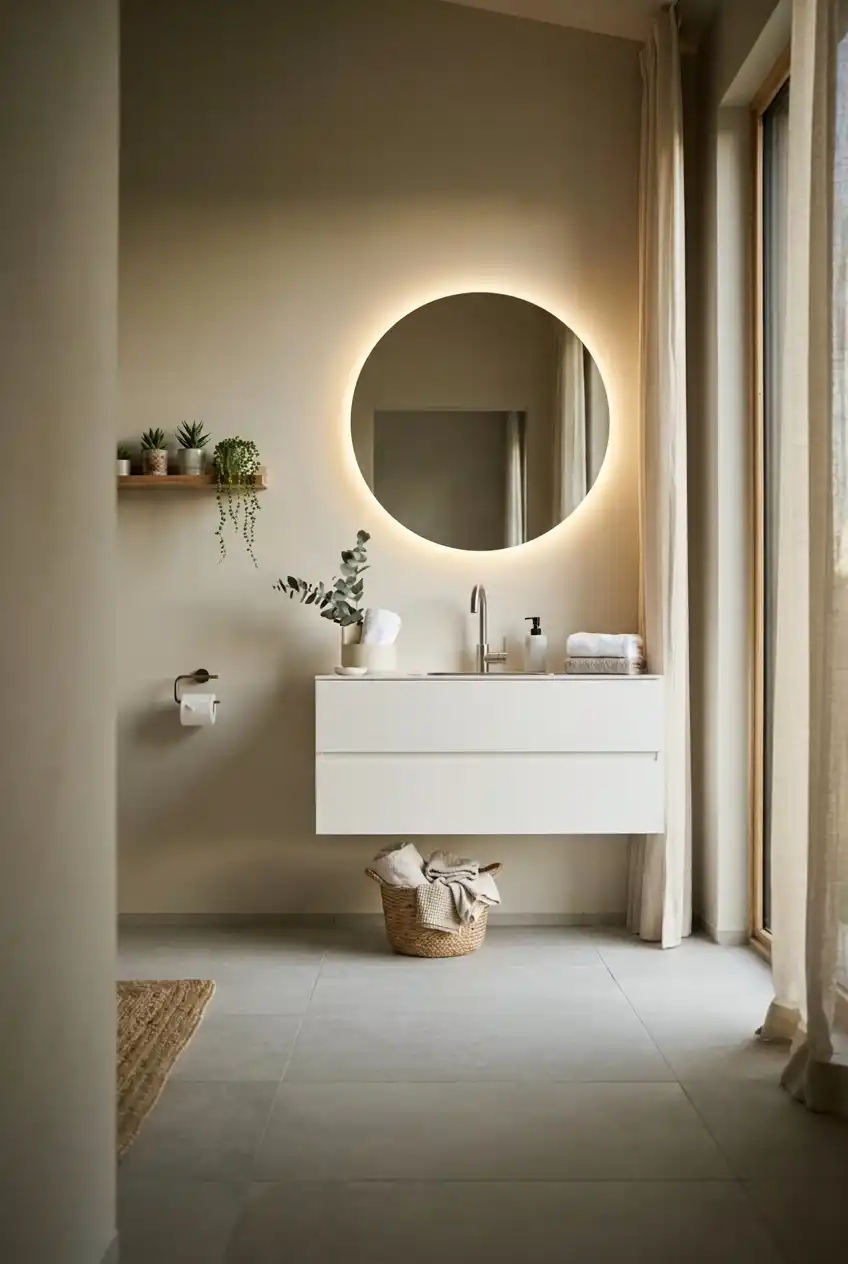
A floating vanity mounts directly to the wall with no legs touching the floor, which makes a small bathroom feel noticeably larger because the sightline continues underneath the cabinet. The visible floor space also makes cleaning easier since there are no corners or legs to navigate around with a mop.
This style works especially well for apartment dwellers and anyone renovating a compact powder room, since it pairs a clean, contemporary look with a genuine sense of openness. It does require solid wall anchoring, so it is best suited for homeowners or renters who can confirm stud placement or install proper blocking.
2. Double Sink Vanity for Shared Bathrooms
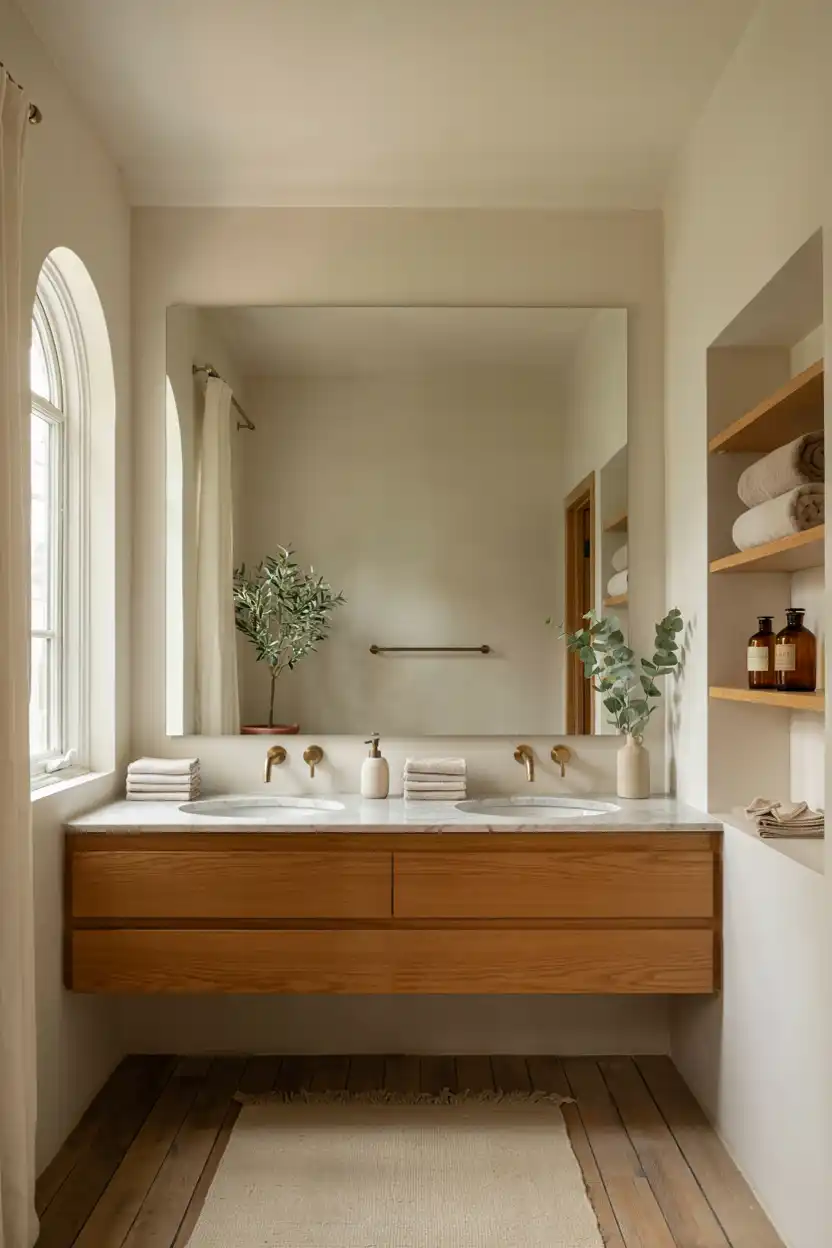
A double sink vanity gives two people separate space to get ready at once, which cuts down on morning bottlenecks in shared family bathrooms or primary suites used by couples. The extra countertop length also means more room for daily essentials without everything piling up in one spot.
This idea is best for households with multiple daily users and a bathroom footprint of at least eight feet in width. It is less practical for single-occupant bathrooms or very small spaces, where the added length would crowd the rest of the room.
3. Reclaimed Wood Rustic Vanity
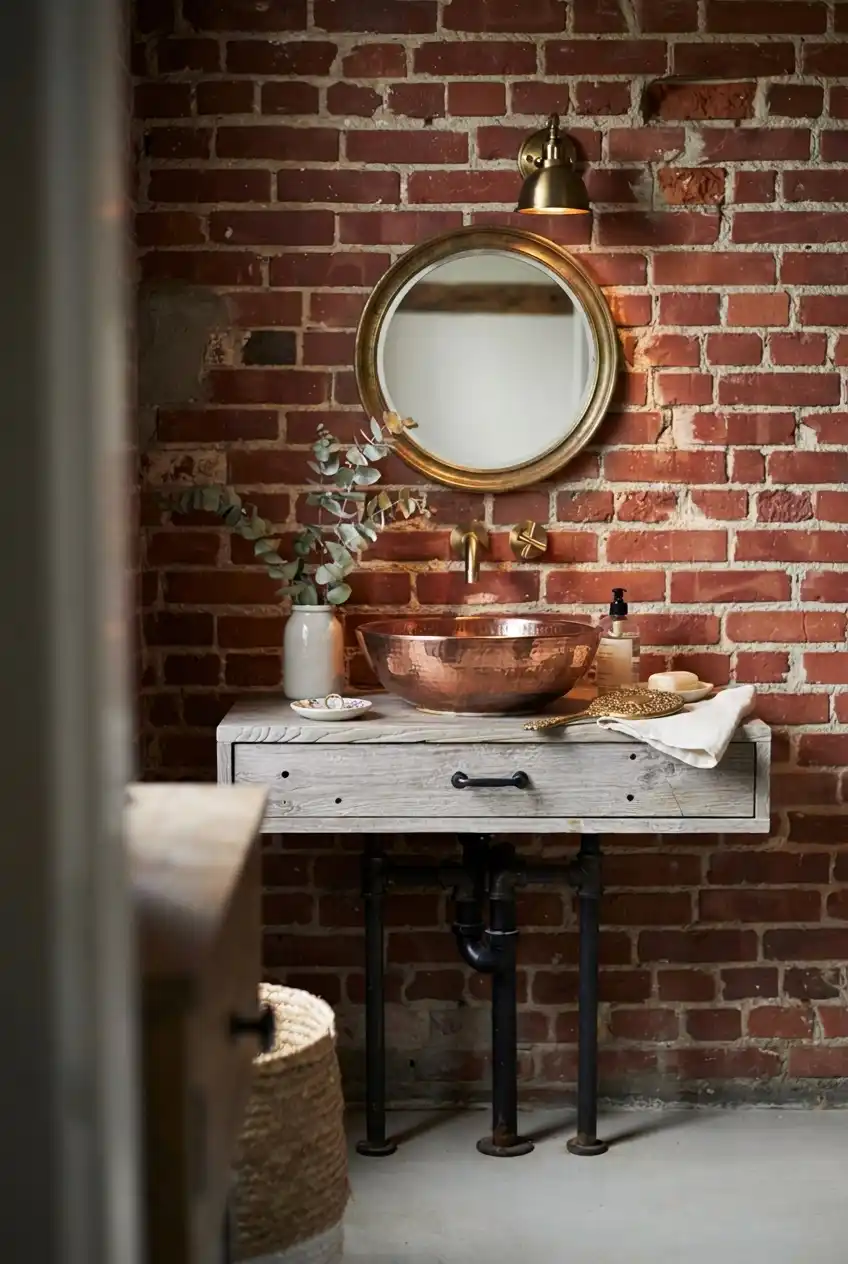
Reclaimed wood brings visible grain, knots, and weathered texture into the bathroom, giving the space real character that mass-produced cabinetry cannot replicate. Pairing the wood with a copper or hammered-metal vessel sink strengthens the rustic feel without looking dated.
This vanity idea suits cabin retreats, farmhouse-style homes, or anyone wanting a one-of-a-kind piece with history. Reclaimed wood needs sealing to handle bathroom humidity, so it is a better fit for households willing to do occasional upkeep rather than a fully low-maintenance option.
4. Vessel Sink Vanity
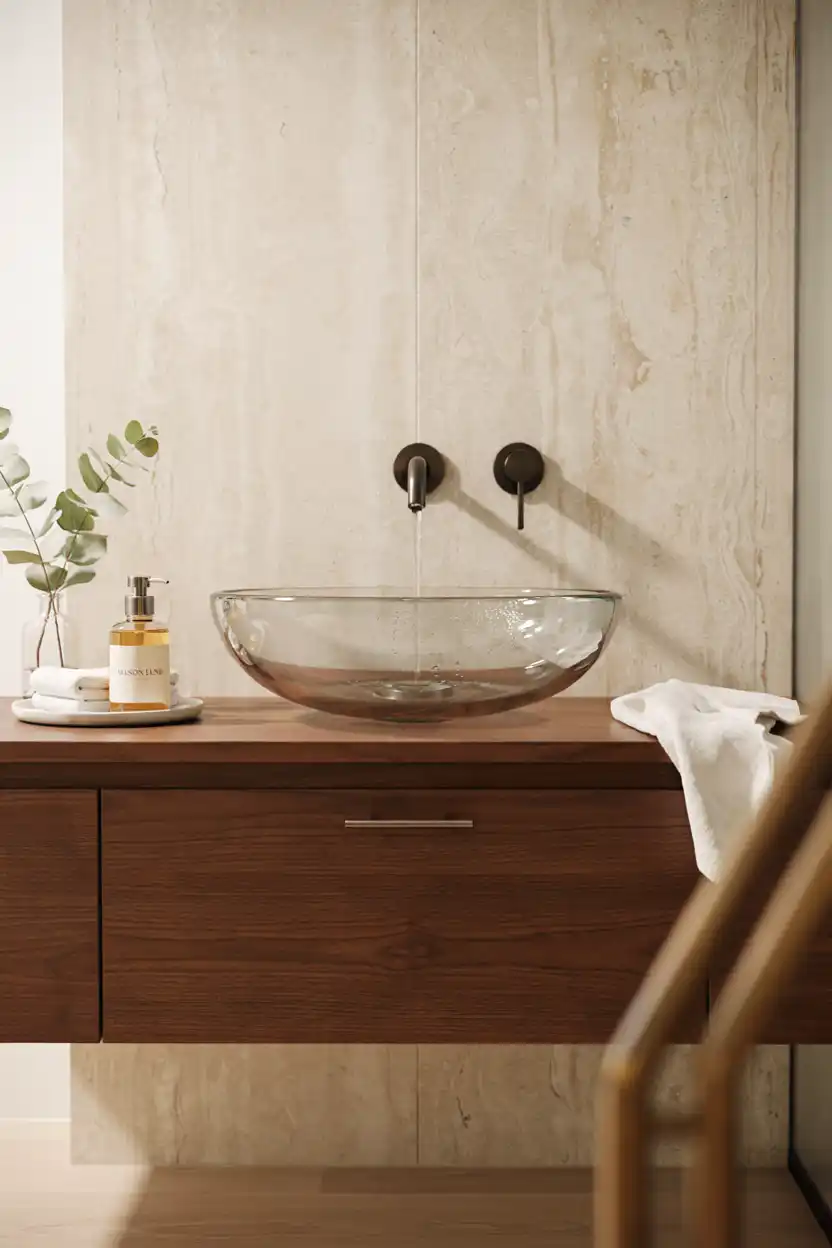
A vessel sink sits on top of the counter rather than being recessed into it, creating a sculptural focal point that reads as more upscale than a standard undermount sink. It pairs naturally with a wall-mounted faucet, which keeps the counter line clean and easy to wipe down.
This look is best suited for design-forward homeowners who want a statement piece and don’t mind a slightly higher counter height, which can take some adjustment for shorter household members. It is a strong option for a primary bathroom remodel where visual impact matters most.
5. Marble Countertop Vanity
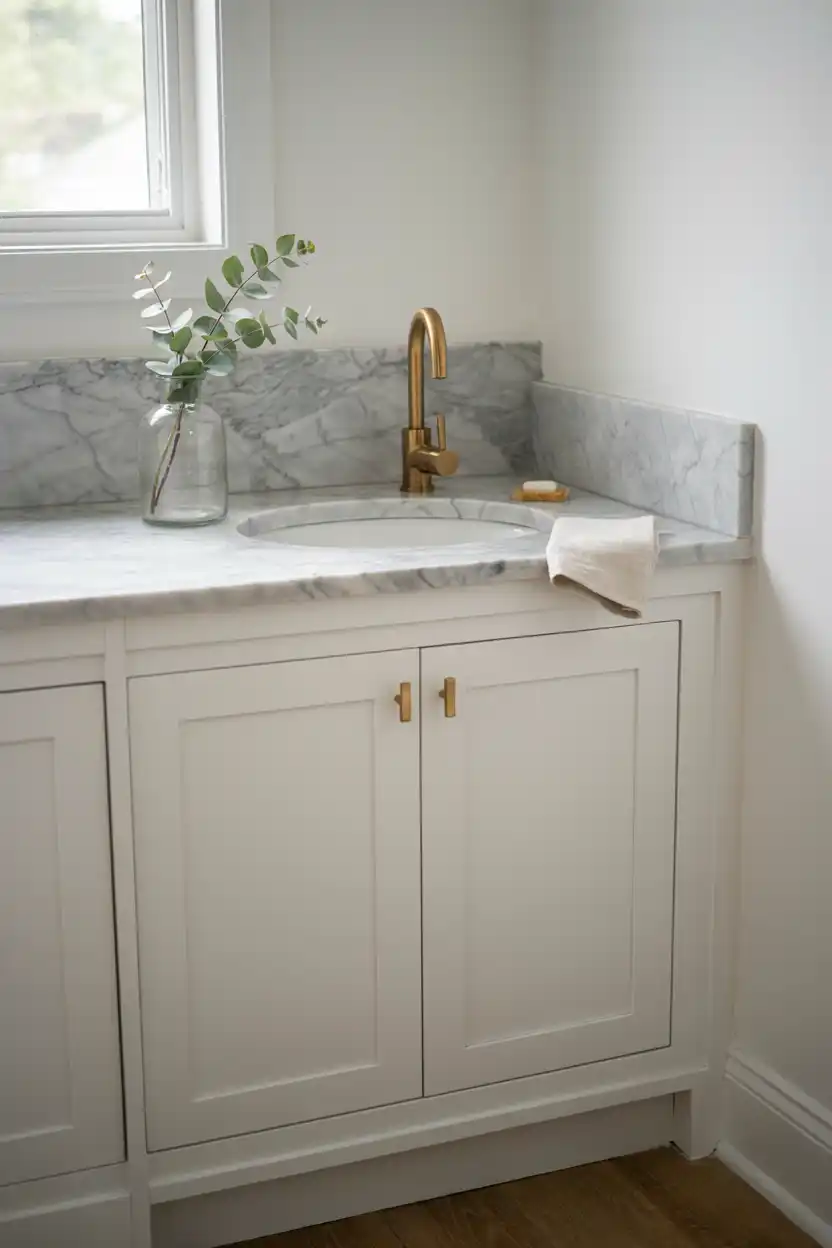
Marble brings natural veining and a cool, polished surface that instantly elevates a bathroom’s appearance, especially when paired with warm metal hardware like brass or gold. It reads as timeless rather than trend-driven, which matters for anyone planning to stay in a home long-term.
This option is best for buyers focused on resale value and classic style, but it does require sealing every six to twelve months since marble is porous and can stain from makeup, perfume, or standing water. Households wanting a lower-maintenance stone look may prefer marble-look quartz instead.
6. Small Space Corner Vanity
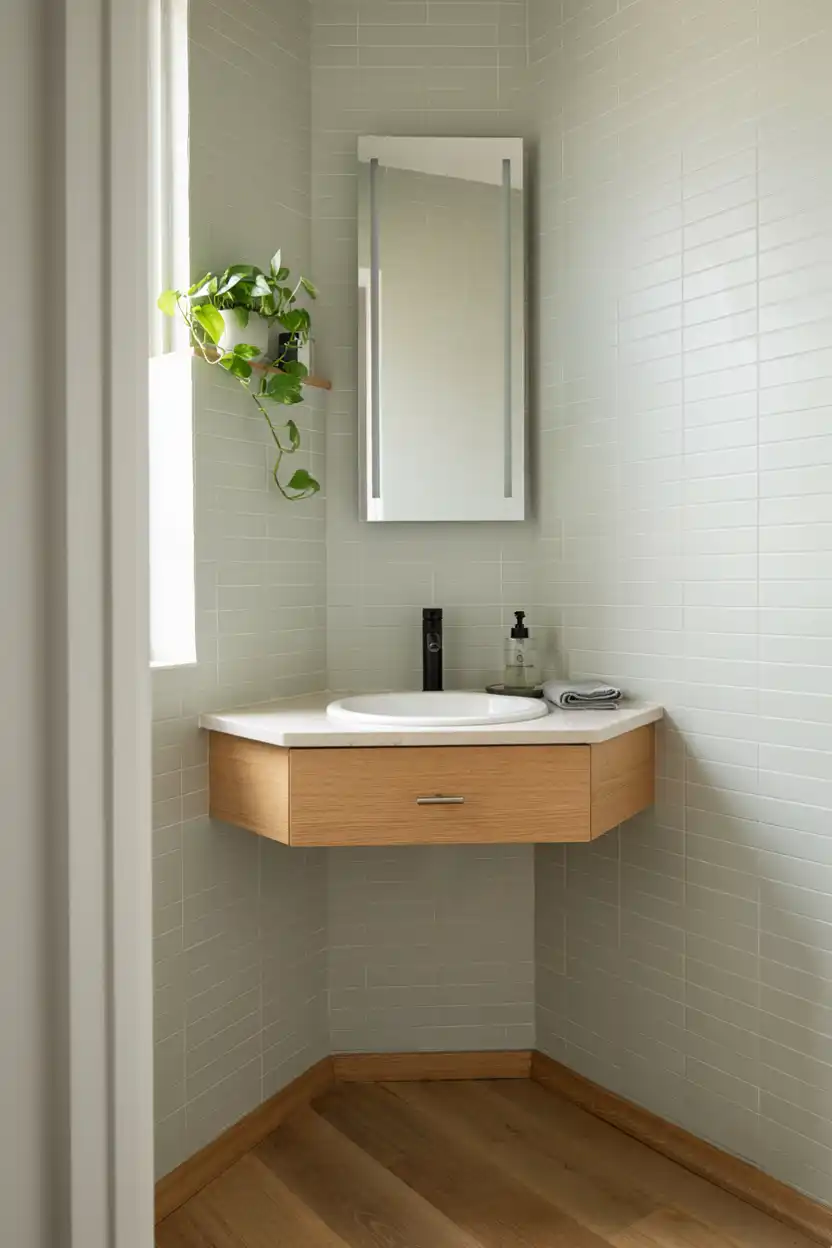
A corner vanity is shaped to fit into an unused triangular corner, reclaiming space that would otherwise sit empty in a small bathroom. It typically holds a compact round or oval sink, which keeps the footprint tight without sacrificing basic counter function.
This idea is ideal for studio apartments, half-baths, and powder rooms under twenty square feet. The tradeoff is limited counter and storage space, so it works best for single-occupant bathrooms rather than a primary bath used by a whole household.
7. Black Matte Vanity
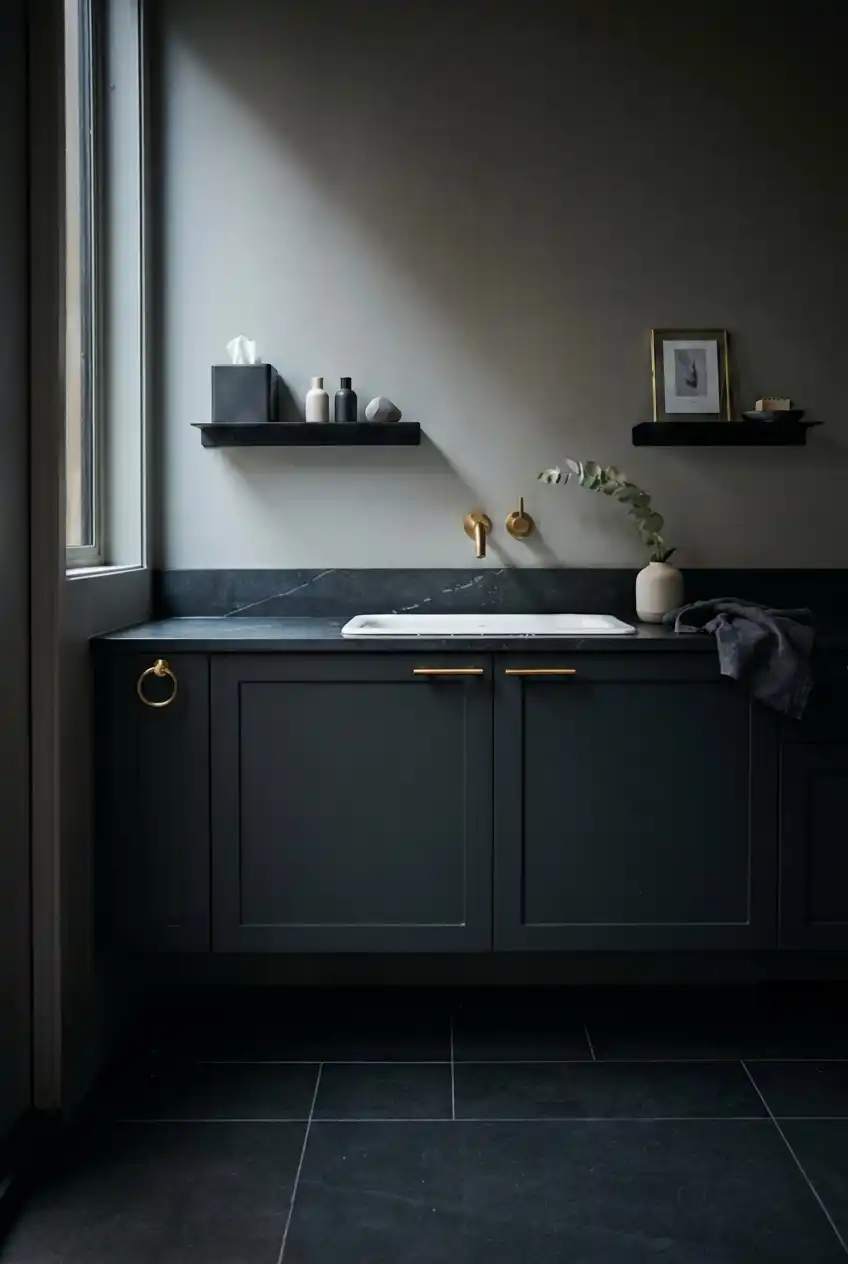
Matte black cabinetry creates a strong contrast against light walls, tile, or a white countertop, giving the room a modern, boutique-hotel feel. The matte finish also hides water spots and fingerprints better than a glossy black surface would.
This vanity idea suits homeowners drawn to bold, moody design and works particularly well in bathrooms with plenty of natural or supplemental lighting, since dark cabinetry can make an already dim room feel smaller. It pairs nicely with warm gold or brushed brass fixtures for contrast.
8. Vintage Dresser Repurposed Vanity
Converting a vintage dresser into a vanity keeps existing drawer storage while giving an old piece of furniture a new purpose. A local carpenter or plumber can cut a hole for a drop-in sink and add a protective sealed top, keeping the original charm intact.
This idea appeals to homeowners who love antique or eclectic decor and already own (or can source secondhand) a sturdy dresser. It takes more upfront customization work than a prefabricated vanity, so it suits people with some renovation patience rather than those wanting a quick swap.
9. Open Shelf Industrial Vanity
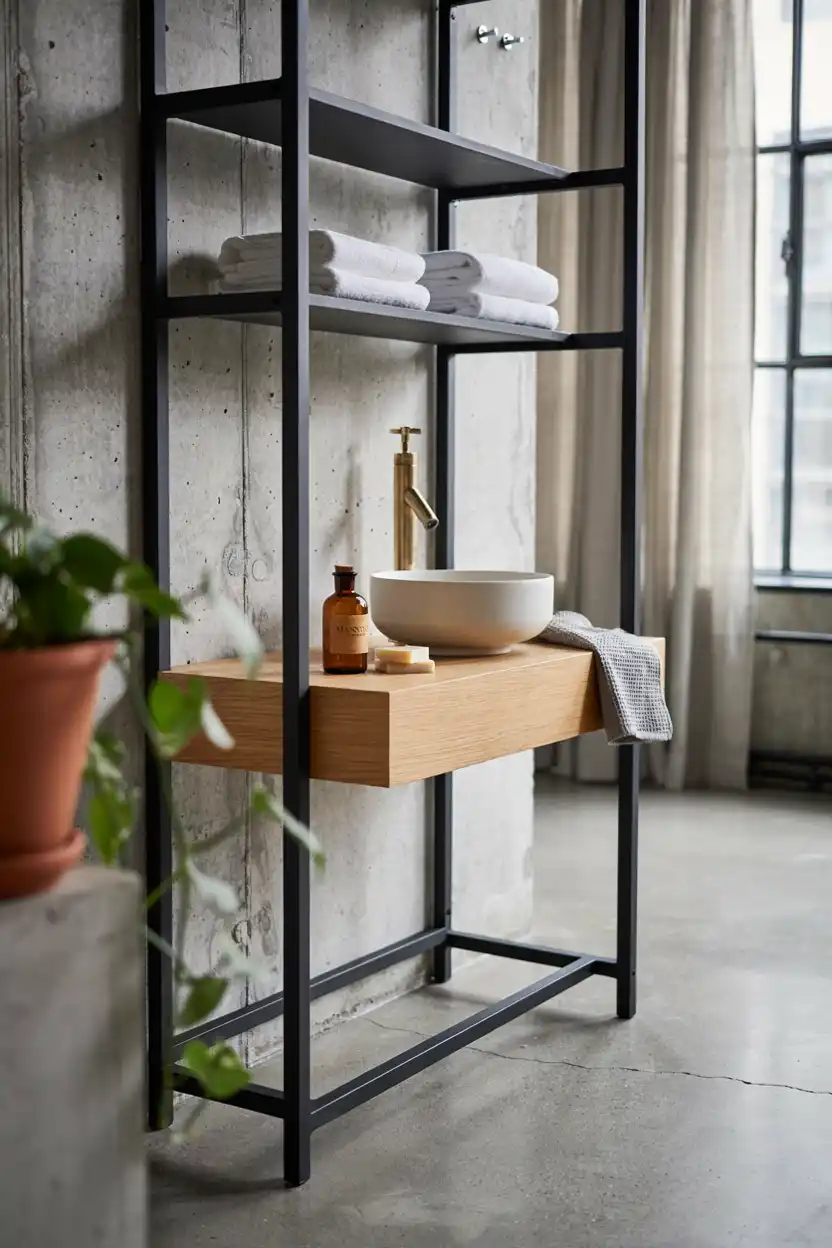
An open-shelf design swaps closed cabinet doors for exposed metal framing, which keeps the vanity visually light while still offering storage for towels and baskets. The industrial hardware and exposed piping give the bathroom an urban, loft-style edge.
This idea works well in modern lofts, converted warehouses, or any home leaning into an industrial aesthetic. Because storage is open rather than hidden, it suits organized households that don’t mind everyday items being on display, and it’s easy to wipe down since there are no doors to clean around.
10. Two-Tone Vanity Cabinet
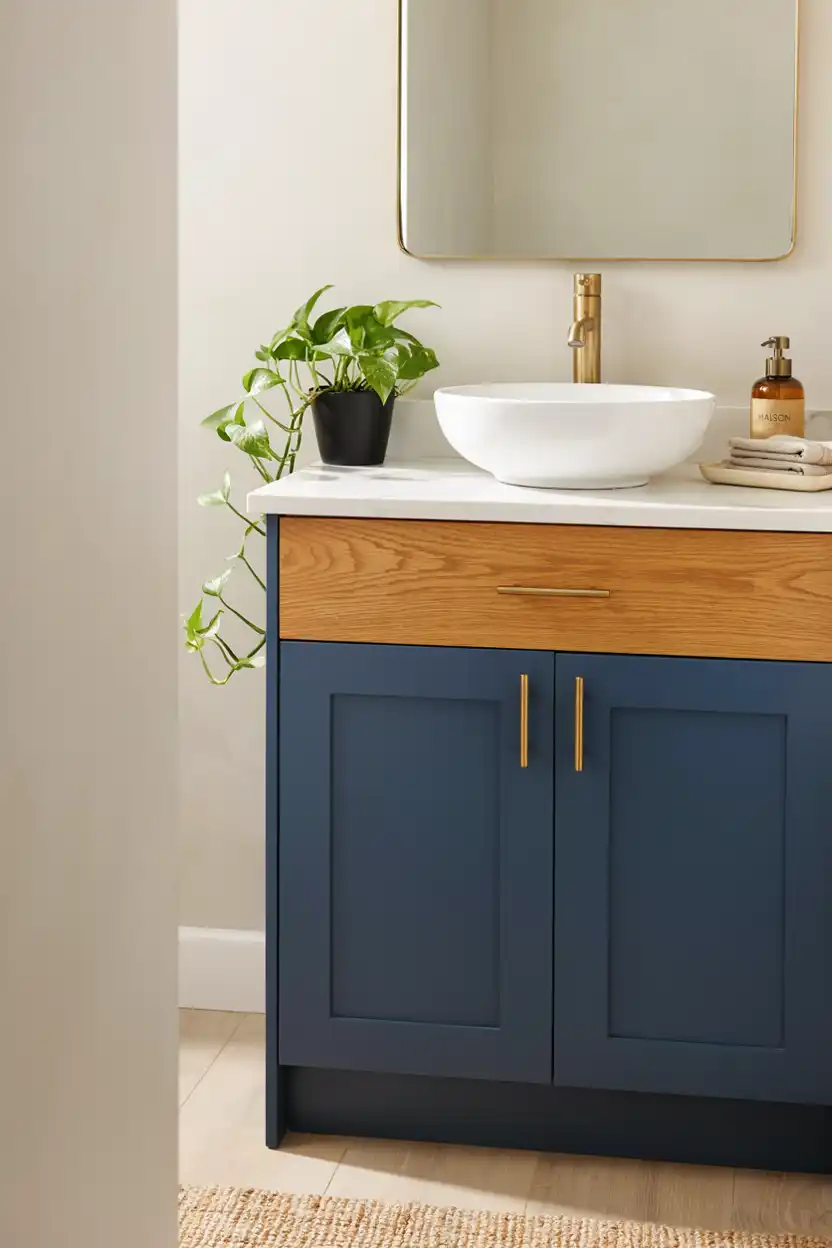
A two-tone vanity pairs two complementary finishes, such as a painted lower cabinet with a natural wood top drawer, to add visual interest without committing to an all-over bold colour. It is an easy way to bring in a trend colour while keeping the overall look balanced.
This idea suits homeowners who want a custom, designer feel without a full custom build. It works in almost any bathroom size and pairs well with either warm or cool-toned countertops, making it a flexible middle ground between classic white and a fully saturated statement colour.
11. Compact Pedestal-Style Vanity with Storage
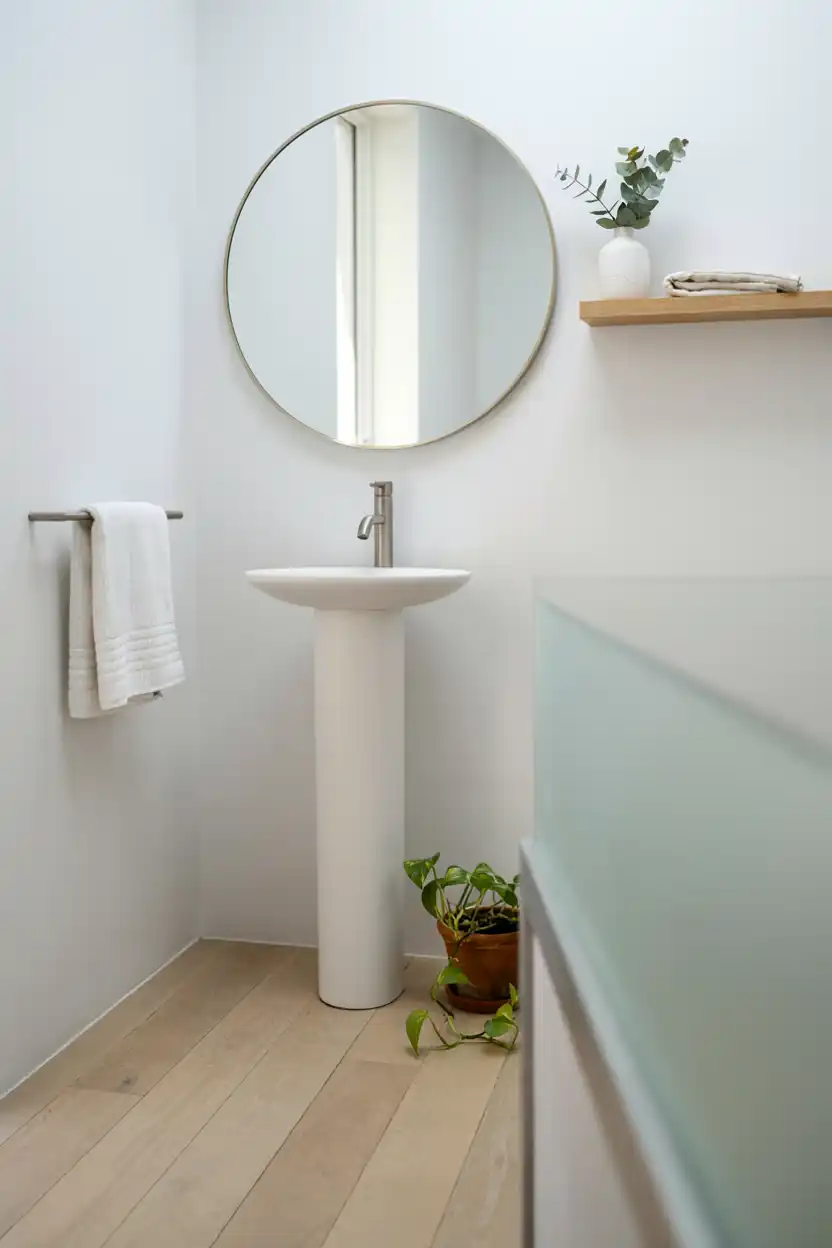
This hybrid design keeps the slim visual profile of a pedestal sink while adding a narrow cabinet base underneath for hidden storage, solving the classic complaint that pedestal sinks offer nowhere to put anything. It typically spans 24 to 30 inches wide.
It’s a strong fit for small bathrooms, guest baths, or apartments where every inch of storage counts, but a bulky vanity would overwhelm the room. The tradeoff is limited counter space compared to a full-width vanity, so it works best for households that don’t need much surface area.
12. Farmhouse Shaker Vanity
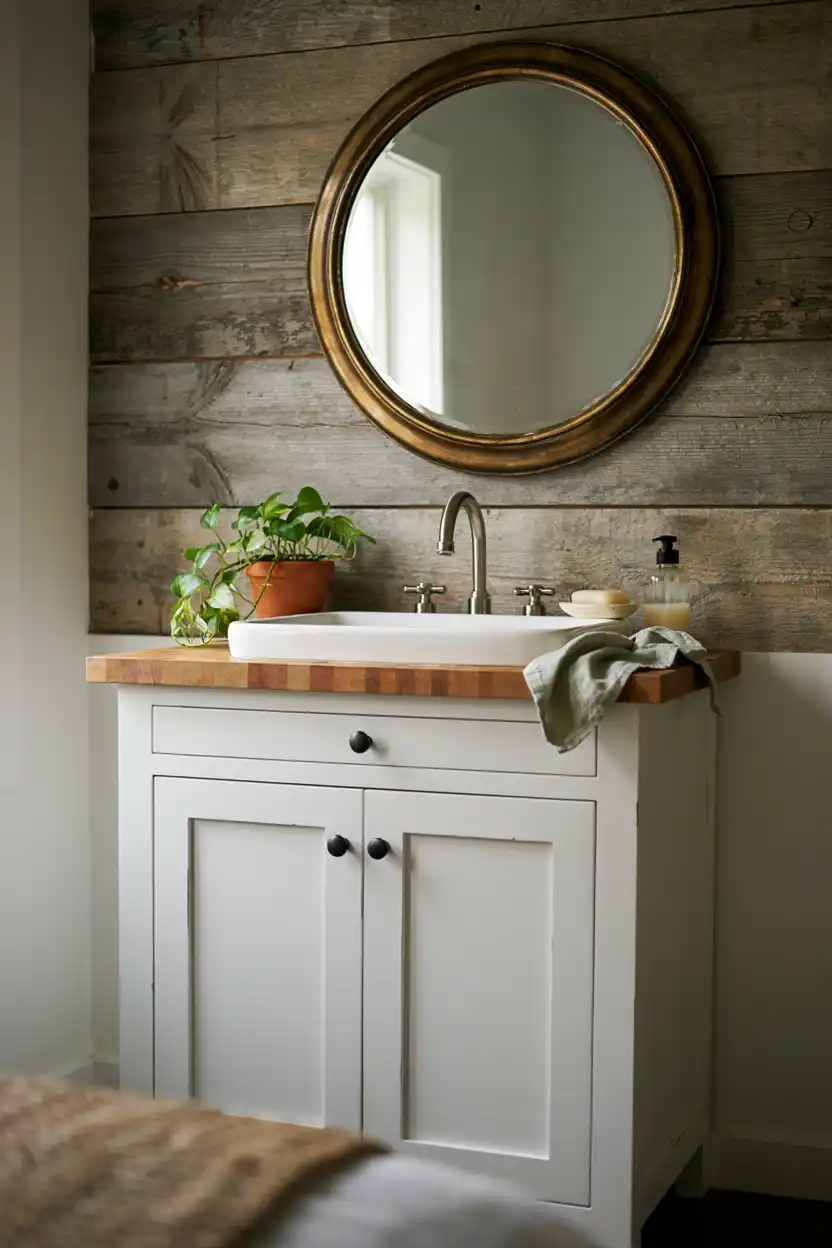
Shaker-style doors bring a simple recessed-panel look that has stayed popular for decades because it works with both traditional and modern decor. Paired with a farmhouse apron sink and black hardware, it creates a warm, cottage-style bathroom that feels welcoming rather than clinical.
This idea suits homeowners renovating a primary or family bathroom who want a design that will not feel dated in five or ten years. It is widely available at most price points, from stock cabinetry to custom builds, making it one of the more budget-flexible ideas on this list.
13. Modern Minimalist White Vanity
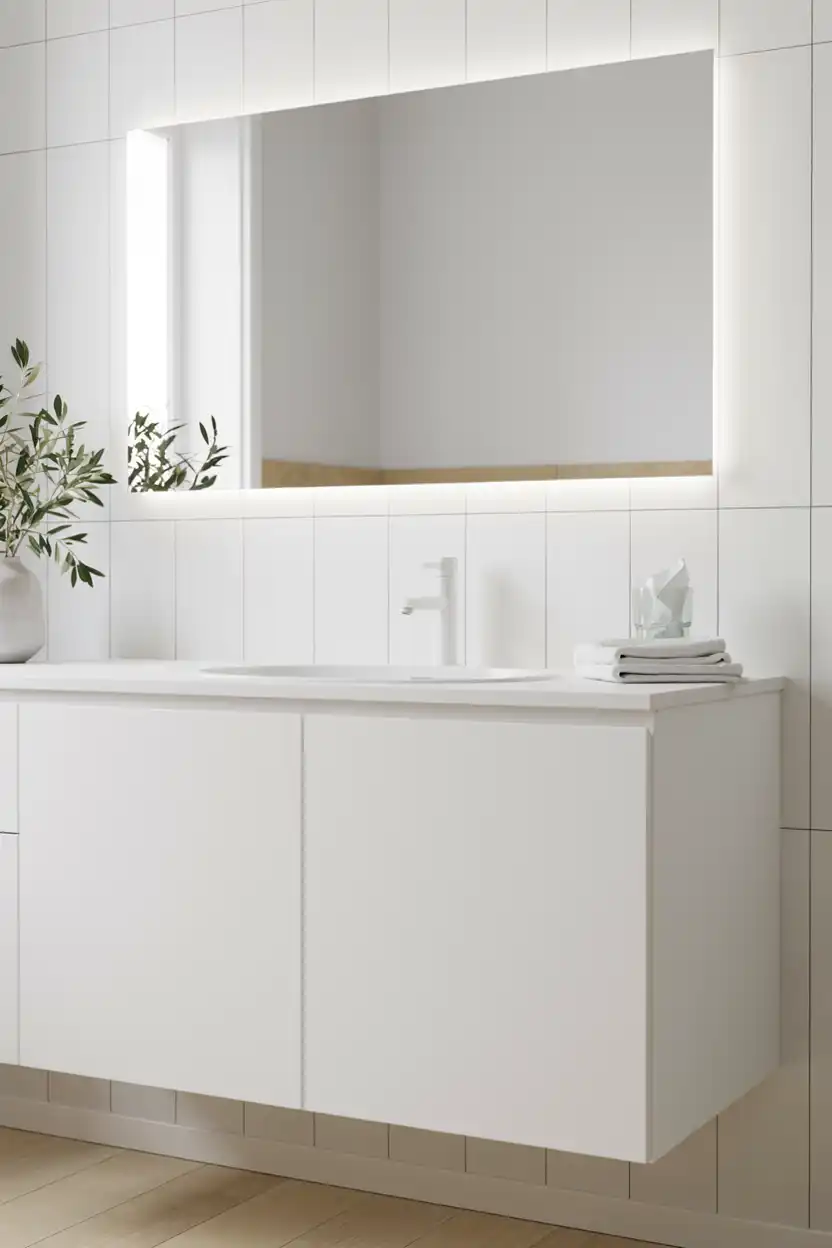
A handleless, flat-panel design strips away visual clutter, using push-to-open hardware and an integrated sink-and-counter unit for one continuous, seamless surface. The all-white palette reflects light well, which helps smaller bathrooms feel bright and open.
This vanity suits Scandinavian or minimalist interiors and works especially well in bathrooms with limited natural light, since the light surfaces bounce available light around the room. It is a lower-maintenance choice overall, though integrated sink tops can be more costly to replace if damaged since they are one moulded piece.
14. Bold Colour Vanity
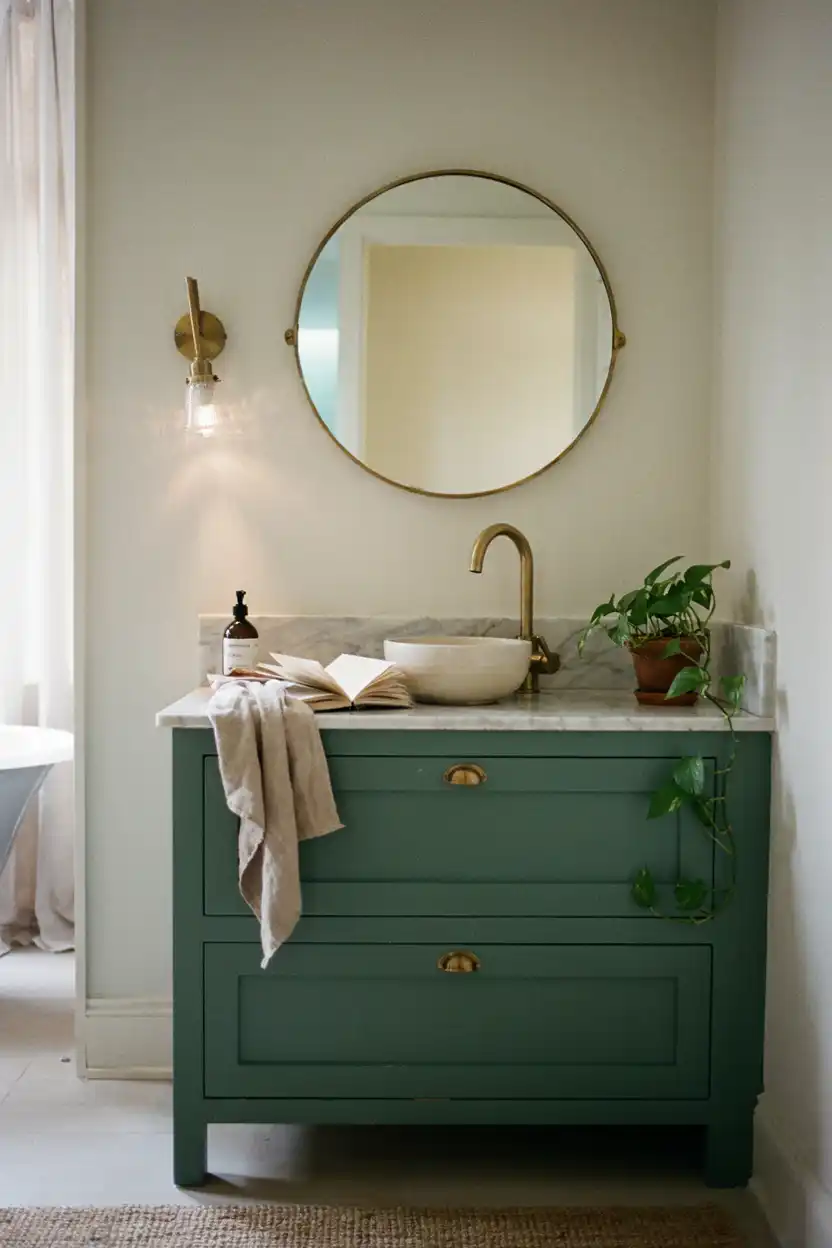
A saturated colour like forest green, deep navy, or terracotta turns the vanity into the room’s focal point, allowing the rest of the bathroom to stay neutral. Brass or gold hardware tends to complement these deeper tones particularly well.
This idea is best for homeowners comfortable with a bolder design statement and who plan to keep other finishes, like tile and paint, more neutral to balance it out. It’s a lower-cost way to add personality since painting an existing cabinet is far cheaper than a full vanity replacement.
15. Vanity with Built-in Lighting Mirror
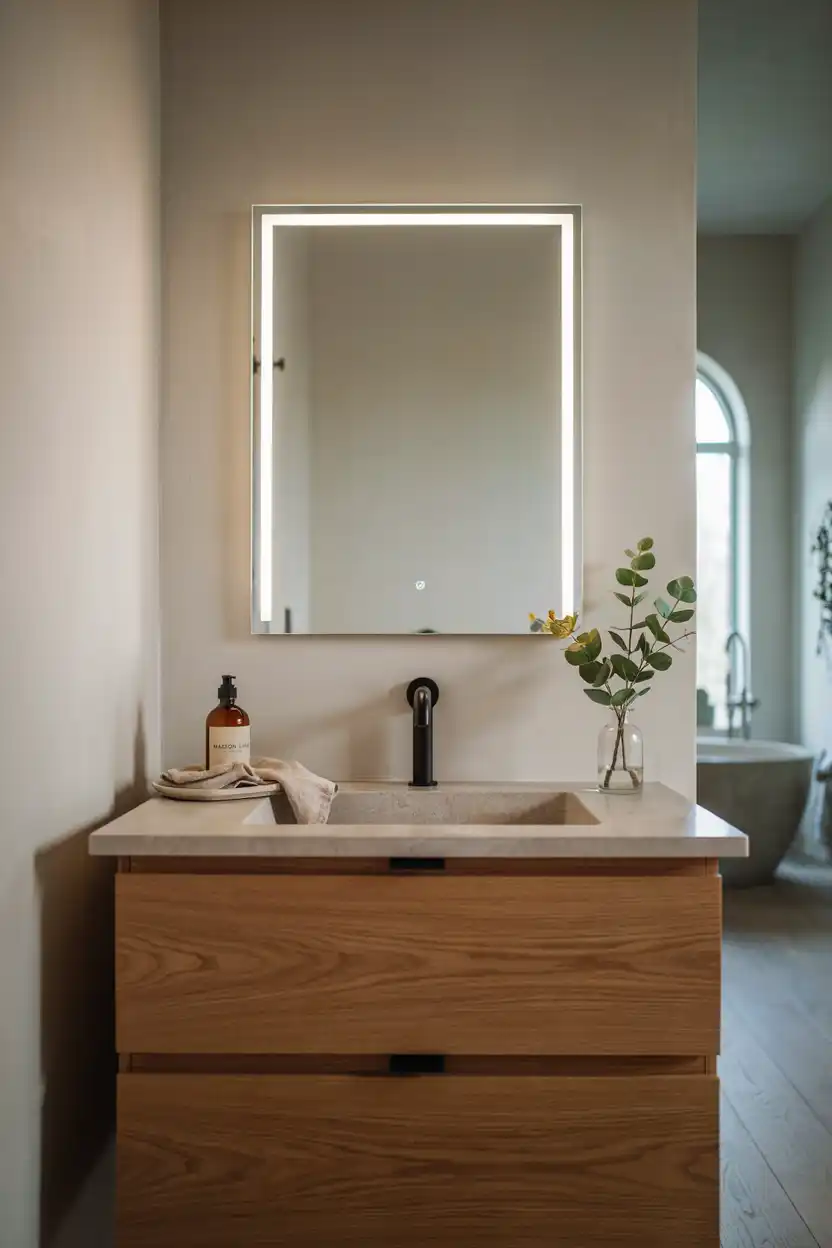
An LED-integrated mirror provides even, shadow-free lighting for grooming tasks like makeup application and shaving, solving a common complaint about harsh or uneven bathroom lighting. Many models include adjustable colour temperature and a built-in anti-fog feature.
This pairing suits anyone prioritizing function alongside style, including households with multiple people who get ready in the same space each morning. It requires an electrical connection near the mirror, so it is easiest to add during a renovation rather than as a quick swap.
16. Concrete Vanity Countertop
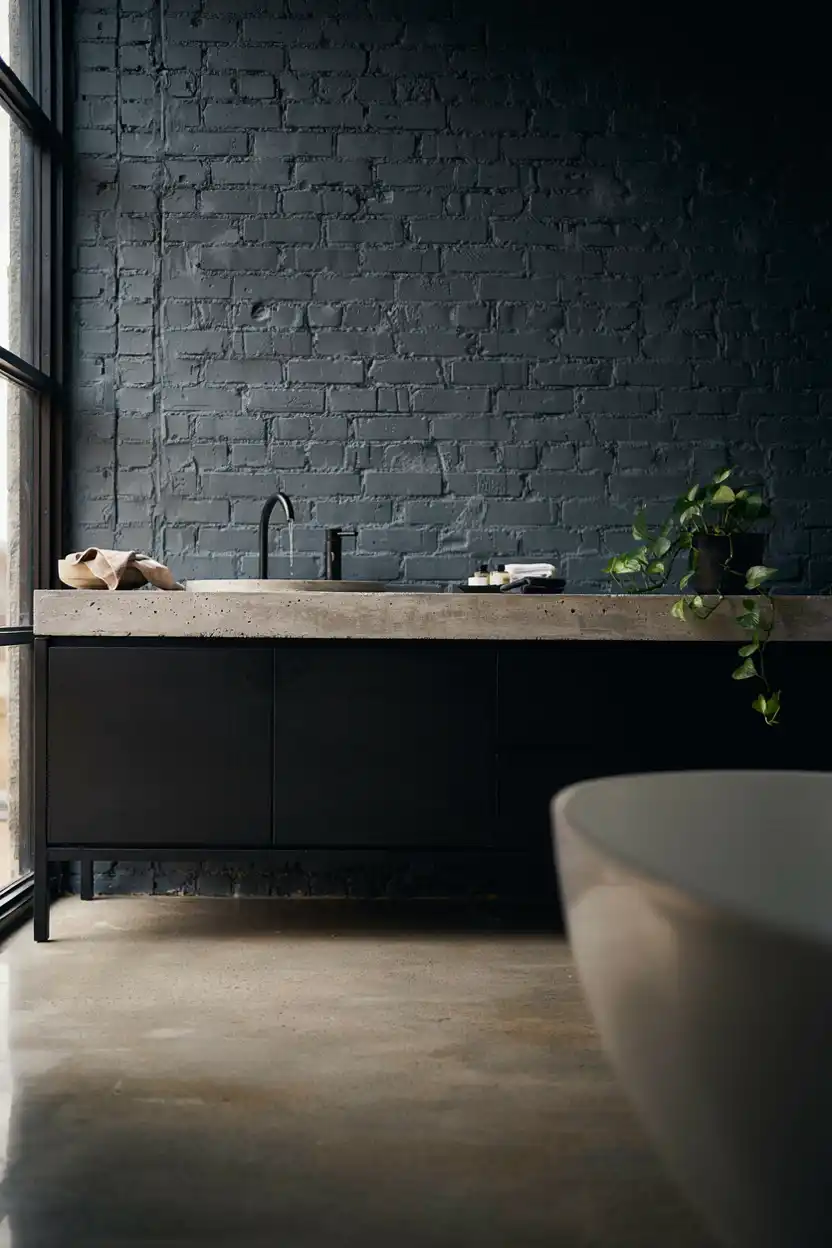
Concrete can be cast into a custom shape, including an integrated sink basin, giving the vanity a seamless, sculptural look that is difficult to achieve with prefabricated stone. Each slab develops subtle variation, so no two vanities look exactly alike.
This option suits homeowners drawn to modern, industrial, or minimalist design who want a genuinely custom piece. Concrete needs periodic sealing to resist staining and hairline cracking, so it is better suited to households willing to do some upkeep rather than a fully hands-off surface.
17. Freestanding Furniture-Style Vanity
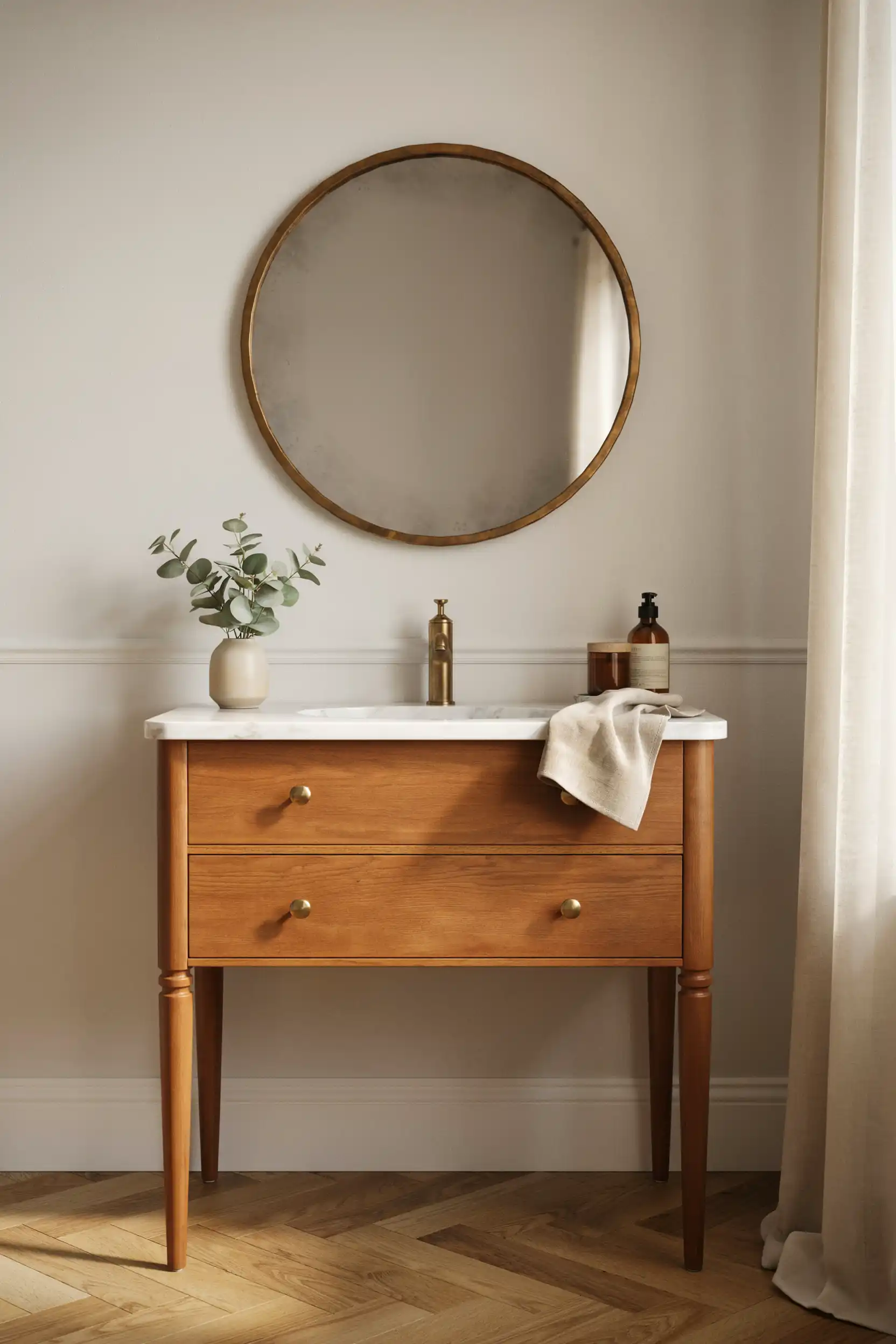
A furniture-style vanity sits on its own legs rather than being boxed in like a standard cabinet, giving it the look of a fine console table that happens to hold a sink. The visible legs and airy base add a lighter, more elegant feel to the room.
This idea suits primary bathrooms in traditional or transitional homes where the vanity is meant to look like a genuine furniture piece rather than built-in cabinetry. It generally offers less enclosed storage than a full cabinet base, so it pairs well with a nearby linen closet or storage tower.
18. Undermount Sink Vanity with Quartz Top
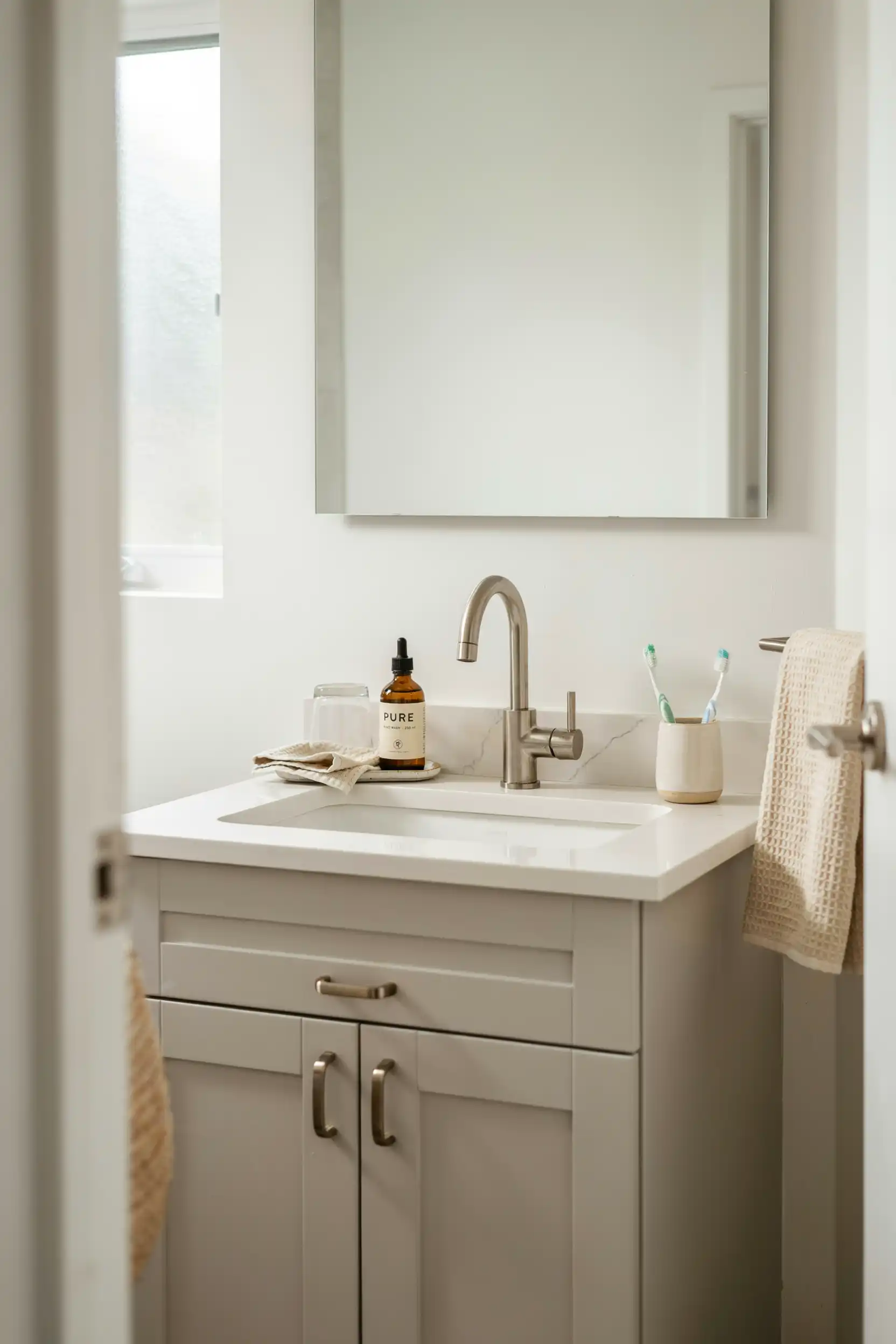
Quartz is engineered rather than quarried, which gives it a consistent, low-maintenance surface that resists staining and doesn’t need regular sealing the way natural stone does. Paired with an undermount sink, the counter wipes clean in one smooth motion with no lip to catch water or debris.
This combination is one of the most practical, family-friendly options on this list, since it balances durability with a wide range of available colours and price points. It is a strong choice for busy households wanting reliable everyday performance over a highly distinctive look.
19. Vanity with Open Wicker Basket Storage
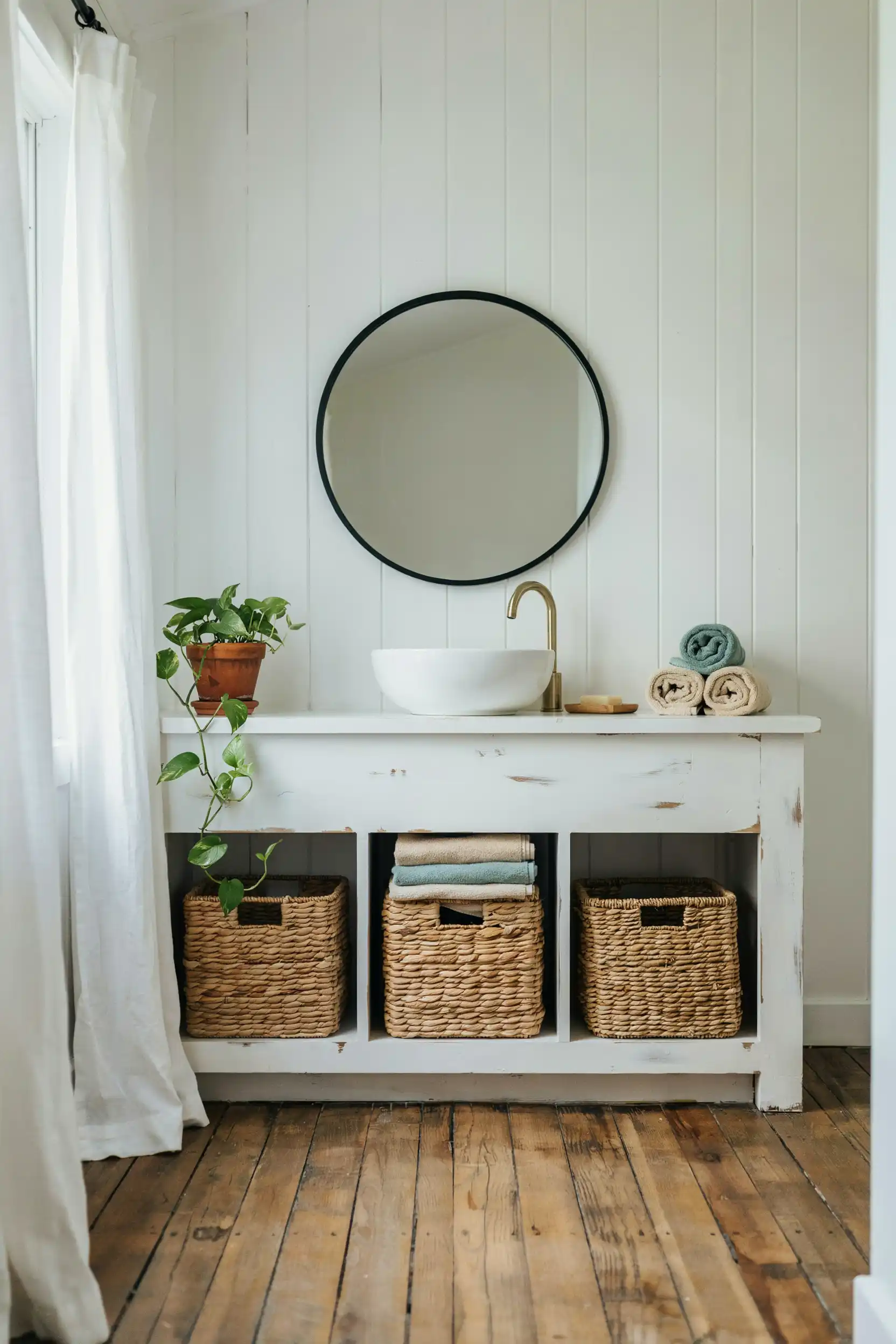
Swapping drawers for open cubbies with woven baskets adds warm texture and a relaxed, coastal feel while keeping everyday items like towels and toiletries within easy reach. The open storage also tends to cost less than fully custom cabinetry with soft-close drawers.
This idea suits beach-house style homes, guest bathrooms, or anyone wanting a casual, textural look. It works best for households that keep baskets tidy, since open storage is visible at all times rather than tucked behind a closed door.
20. Wall-to-Wall Custom Vanity for Master Bath
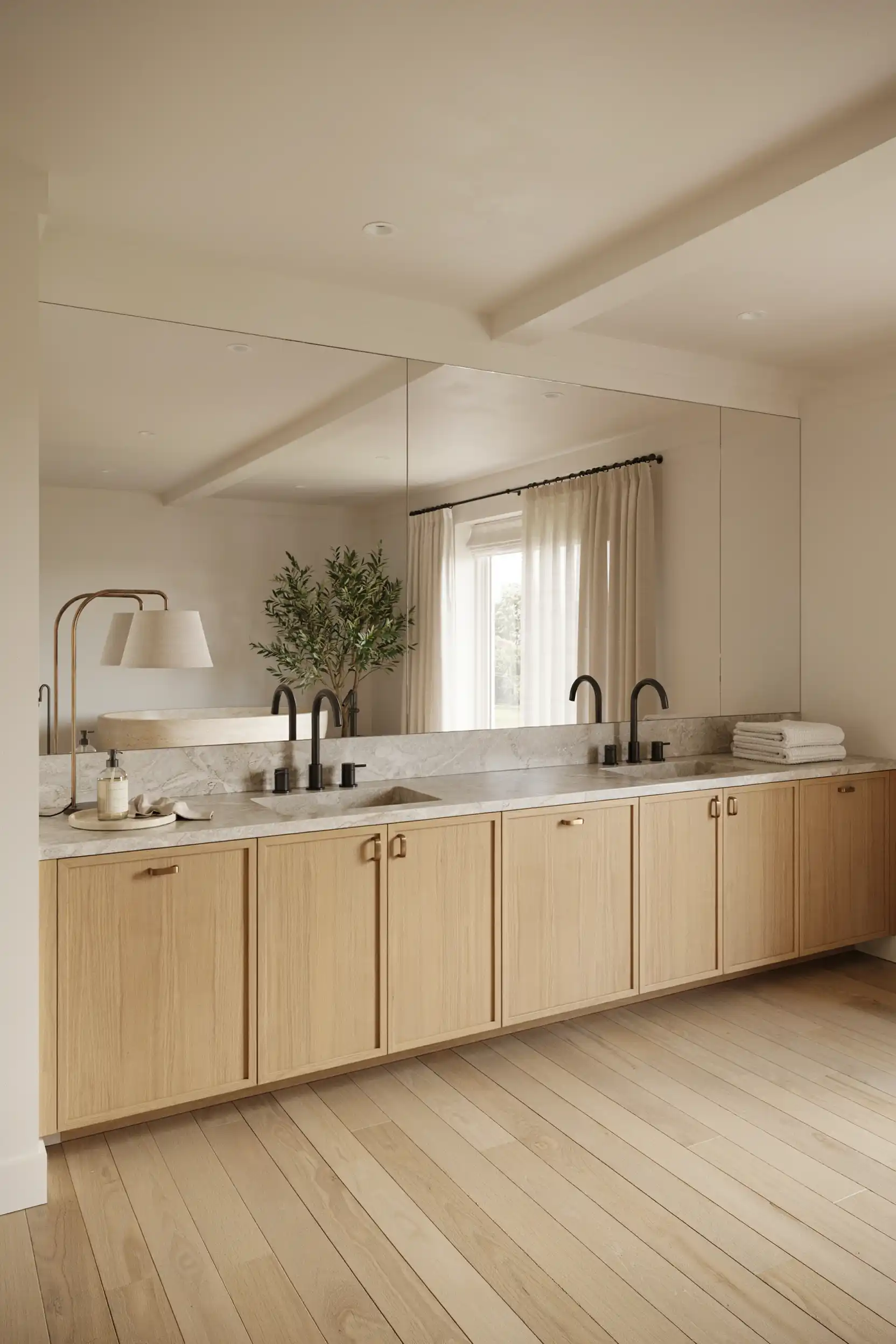
A wall-to-wall vanity is built to the exact dimensions of the room, maximizing every inch of counter and storage space along an entire wall. It often includes dual sinks, a seated makeup station, and a full-width mirror for a true spa-like feel.
This idea is best suited for larger primary bathrooms and homeowners planning a significant renovation, since custom millwork carries a higher price tag than stock or semi-custom cabinetry. It offers the most storage and counter space of any idea on this list, making it ideal for households that want everything within reach.
Planning and Buying Tips
Space Requirements
Measure the full width, depth, and height of the installation area before shopping, and note the location of existing plumbing, outlets, and any windows or doors that swing into the space. Standard vanities run 24 to 72 inches wide, with 21 inches of depth common for smaller bathrooms and 22 to 24 inches for standard installations. Leave at least 30 inches of clearance in front of the vanity for comfortable use.
Installation and Setup Considerations
Confirm whether the new vanity will reuse the existing plumbing footprint or require moving the water supply lines and drain, since relocation adds meaningful labour cost and may require opening the wall. Floating vanities need blocking or heavy-duty anchors rated for the combined weight of the cabinet, countertop, and sink, so verify the wall structure before purchase, especially in older homes.
Structural and Technical Factors
Check that the countertop material and sink combination match the existing faucet’s hole spacing, typically a single hole, 4-inch center set, or 8-inch widespread configuration. If adding a backlit mirror or integrated lighting, confirm there is an accessible electrical connection nearby or budget for an electrician to add one.
Standard Sizing and Specs to Shop For
• Single-sink vanities: 24 to 48 inches wide
• Double-sink vanities: 60 to 72 inches wide, minimum 12 inches between sink centers
• Standard counter height: 32 to 36 inches (comfort-height options run up to 36 inches)
• Standard depth: 18 to 21 inches for compact spaces, 22 to 24 inches standard
Cost Breakdown
Budget ($150–$600): Stock laminate or thermofoil vanities from home improvement stores, often sold with a pre-attached cultured marble or laminate top. DIY installation with existing plumbing runs $0–$150 in extra materials; hiring a plumber for a straightforward swap typically adds $150–$350.
Mid-Range ($600–$2,000): Solid wood or plywood cabinets with quartz or granite tops, semi-custom sizing, and upgraded hardware. Installation, including minor plumbing adjustments,s generally runs $300–$700.
Luxury/Premium ($2,000–$8,000+): Fully custom cabinetry, natural marble or concrete tops, integrated lighting, and dual-sink configurations. Installation with plumbing relocation, electrical work, and custom fitting can add $800–$2,500 or more, depending on the scope of the remodel.
Materials and Options Comparison
| Material/Type | Price Range | Durability | Water Resistance | Best For |
| Laminate/Thermofoil | 100-400$ | Moderate | Good | Budget renovations, rentals |
| Solid Wood | 400–1500$ | High with care | Moderate (needs sealing) | Traditional, farmhouse styles |
| MDF/Plywood Cabinet | 200-700$ | Moderate | Good | Mid-range, semi-custom builds |
| Quartz Countertop | 50–100$ | Very High | Excellent | Busy family bathrooms |
| Marble Countertop | 75-150$ | Moderate (porous) | Fair (needs sealing) | Classic, upscale style |
| Concrete Countertop | 65–135$ | High with sealing | Fair (needs sealing) | Industrial, custom looks |
| Metal (steel/pipe frame) | 150-600$ | Very High | Excellent | Industrial, open-shelf designs |
Maintenance Tips
Cleaning
Wipe down countertops daily with a non-abrasive cleaner suited to the material; avoid vinegar or acidic cleaners on natural stone, since they can etch the surface. Use a soft cloth on cabinet finishes to prevent scratching, and dry sink basins after use to prevent water spotting.
Upkeep
Reseal natural stone or concrete countertops every six to twelve months,s depending on daily use, and check caulking around the sink and backsplash annually to prevent water from seeping behind the vanity. Tighten cabinet hinges and drawer glides periodically, since humidity can cause hardware to loosen over time.
Common Issues to Avoid
• Letting standing water sit on wood or stone surfaces, which causes staining and warping
• Skipping ventilation, which accelerates cabinet swelling in humid bathrooms
• Using harsh abrasive cleaners on quartz or laminate, which dulls the finish
• Ignoring small leaks under the sink, which can rot cabinet bases over time
Frequently Asked Questions
What is the standard size for a bathroom vanity?
Most single-sink vanities range from 24 to 48 inches wide, while double-sink vanities typically start around 60 inches. Standard depth runs 18 to 24 inches, and counter height is usually 32 to 36 inches.
How much does it cost to replace a bathroom vanity?
A basic vanity replacement using existing plumbing typically costs $300 to $1,0,00 including installation, while mid-range to luxury projects with new countertops or plumbing changes can run $1,500 to $5,000 or more.
What material is best for a bathroom vanity countertop?
Quartz is generally considered the best all-around choice because it resists staining, doesn’t require sealing, and holds up well to daily moisture, though marble and concrete offer more distinctive natural looks for those willing to do extra upkeep.
Can I install a bathroom vanity myself?
A straightforward vanity swap that reuses the existing plumbing location is a manageable DIY project for someone comfortable with basic tools, but any project involving moving pipes, electrical work for lighting, or structural wall anchoring is best left to a licensed professional.
How do I choose the right vanity size for a small bathroom?
Measure the available wall width and leave at least 30 inches of clearance in front of the vanity, then look at floating, corner, or slim pedestal-style vanities between 24 and 36 inches wide, which maximize storage without overwhelming the room.
How to Choose the Right Bathroom Vanity for You
The best bathroom vanity comes down to matching three factors: available space, budget, and how the bathroom is actually used day to day. A single-occupant apartment bathroom benefits most from a floating, corner, or slim pedestal-style vanity that maximizes visual space, while a shared family or primary bathroom usually calls for a double-sink or wall-to-wall custom layout with durable, low-maintenance materials like quartz. Budget-conscious renovators can lean on stock shaker or laminate cabinets without sacrificing style, while those planning a long-term or high-resale-value remodel may find the added cost of natural stone or custom millwork worthwhile.
Whichever style you choose, prioritize practical factors like plumbing compatibility, storage needs, and material durability alongside aesthetics, since a vanity you love to look at should also hold up to years of daily use. Ready to start planning your own bathroom vanity project? Save your favourite ideas from this list and bring them to a local showroom or contractor to get a firm quote for your specific space.




- Be Respectful
- Stay Relevant
- Stay Positive
- True Feedback
- Encourage Discussion
- Avoid Spamming
- No Fake News
- Don't Copy-Paste
- No Personal Attacks
- Be Respectful
- Stay Relevant
- Stay Positive
- True Feedback
- Encourage Discussion
- Avoid Spamming
- No Fake News
- Don't Copy-Paste
- No Personal Attacks
