18 Bathroom Counter Ideas That Instantly Upgrade Your Space
Published: 07/16/2026
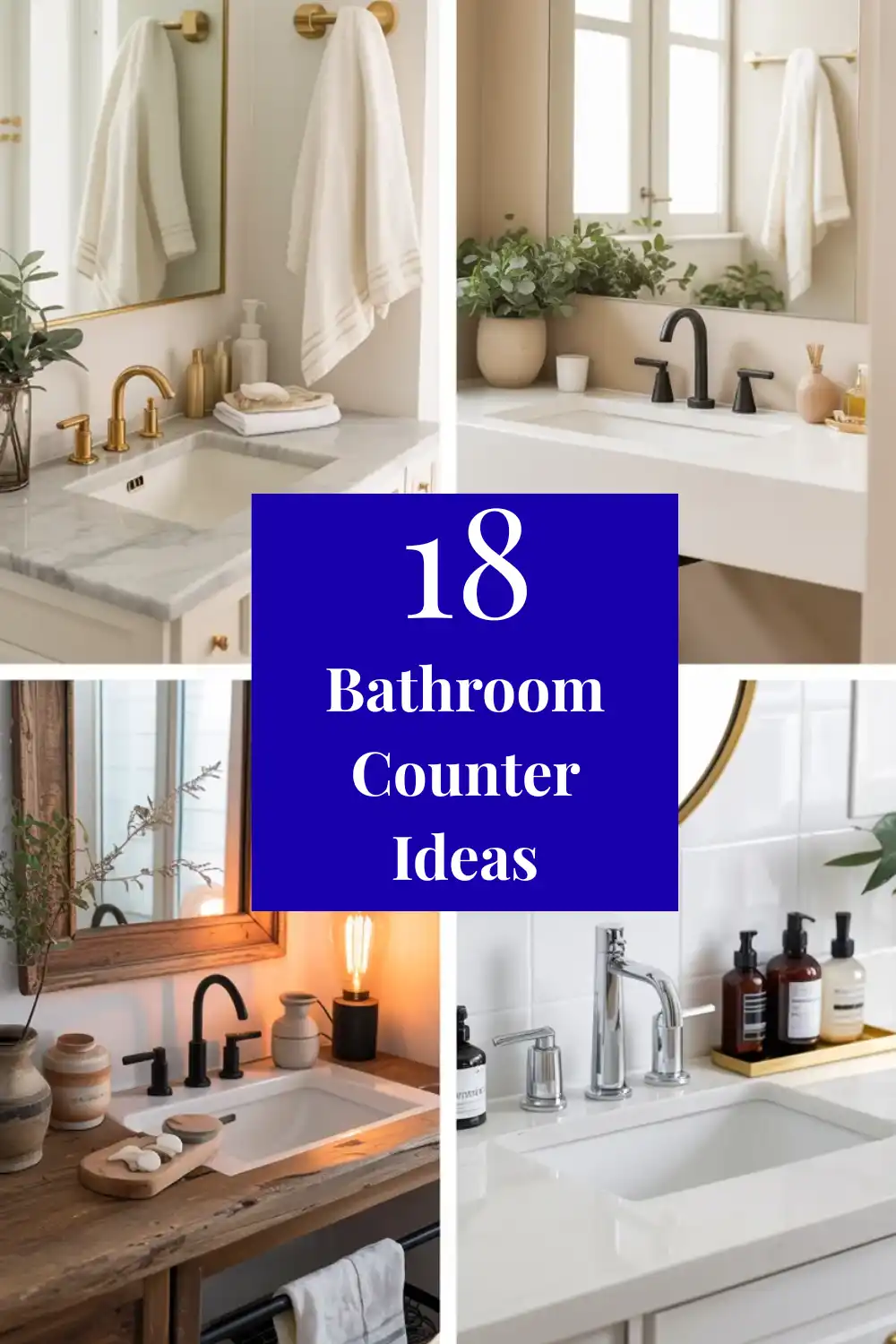
If your bathroom feels dated, cramped, or just uninspired, the countertop is often the fastest fix with the biggest visual payoff. A worn laminate top or a cracked builder-grade surface can drag down an otherwise decent bathroom, while a well-chosen counter instantly upgrades the whole room without the cost or disruption of a full remodel. Bathroom counter ideas work especially well for homeowners who want a high-impact update on a realistic timeline and budget, whether that means a weekend DIY swap or a professionally templated stone slab. In this guide, you’ll find 18 distinct countertop ideas spanning materials, finishes, and price points, along with planning tips, real cost ranges, a materials comparison table, maintenance advice, and answers to the most common questions homeowners search for before buying.
Is a Bathroom Counter Upgrade Right for You?
A new countertop is one of the highest-value, lowest-disruption bathroom upgrades available, but it’s not automatically the right move for every situation. Here’s a quick look at what to weigh before you commit.
Pros
Delivers a dramatic visual upgrade without a full gut renovation
Wide range of materials fits nearly every budget, from laminate to natural stone
Can improve function with added storage, double sinks, or a better layout
Strong return on investment, especially in primary and guest bathrooms
Many options can be installed in a day or two once fabricated
Cons
Natural stone (marble, granite, concrete) requires sealing and ongoing maintenance
Premium materials like onyx or waterfall quartz carry a significant cost jump
Stone and concrete slabs typically require professional templating and installation
Sink and plumbing rough-in locations may need to shift, adding labor cost
Fabrication lead times for custom slabs can run two to four weeks
1. Quartz Waterfall Countertop
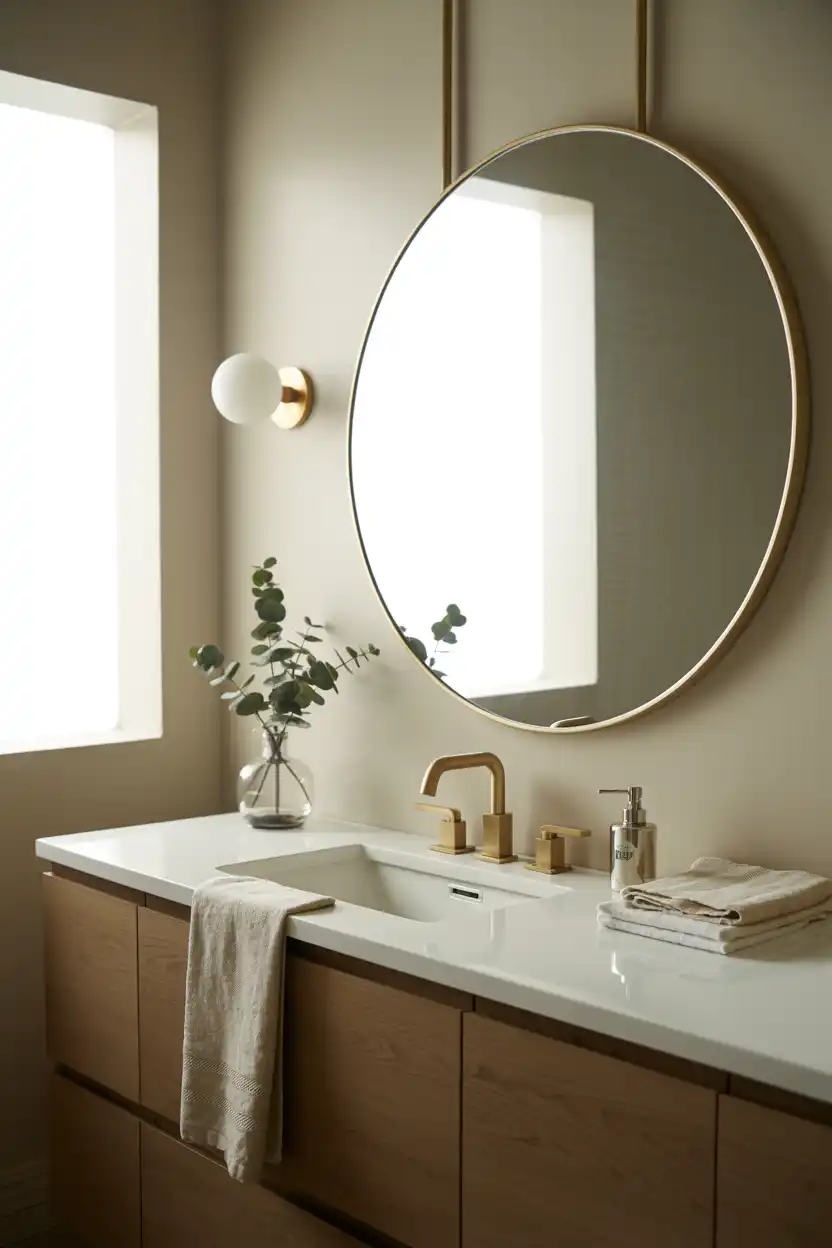
A waterfall countertop takes the slab beyond the vanity top and lets it wrap continuously down the sides to the floor, creating an unbroken, sculptural line that instantly reads as high-end. Because quartz is engineered rather than quarried, the pattern repeats seamlessly across the wrap, so the waterfall edges look intentional rather than mismatched.
Beyond the visual impact, quartz is nonporous and doesn’t require sealing, which makes it one of the lowest-maintenance premium options available. It resists stains from makeup, hair dye, and toothpaste, and stands up well to daily splashing.
This look is best suited to homeowners who want a modern, gallery-like statement piece and are willing to invest a bit more in fabrication, since the wrapped sides add material and labor cost compared to a standard flat top.
2. Carrara Marble Vanity Top
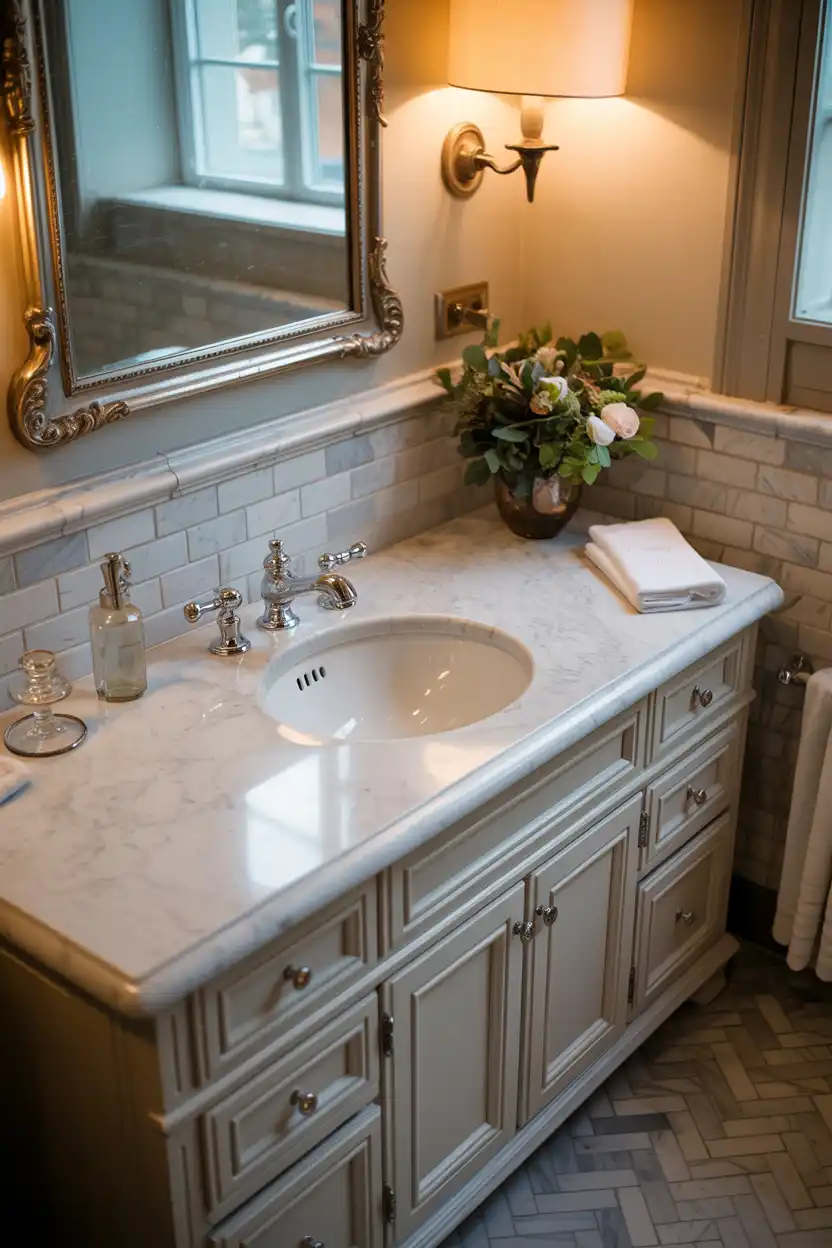
Carrara marble remains the benchmark for timeless bathroom luxury, prized for its soft grey veining set against a bright white background. No two slabs are alike, so the countertop becomes a natural piece of art in the room.
Marble is porous and softer than granite or quartz, which means it needs to be sealed on installation and resealed roughly once a year to resist etching from toothpaste, perfume, and acidic skincare products.
It’s best suited to homeowners who love a classic, traditional aesthetic and don’t mind a bit of upkeep in exchange for a look that consistently boosts resale value in primary bathrooms.
3. Butcher Block Wood Counter
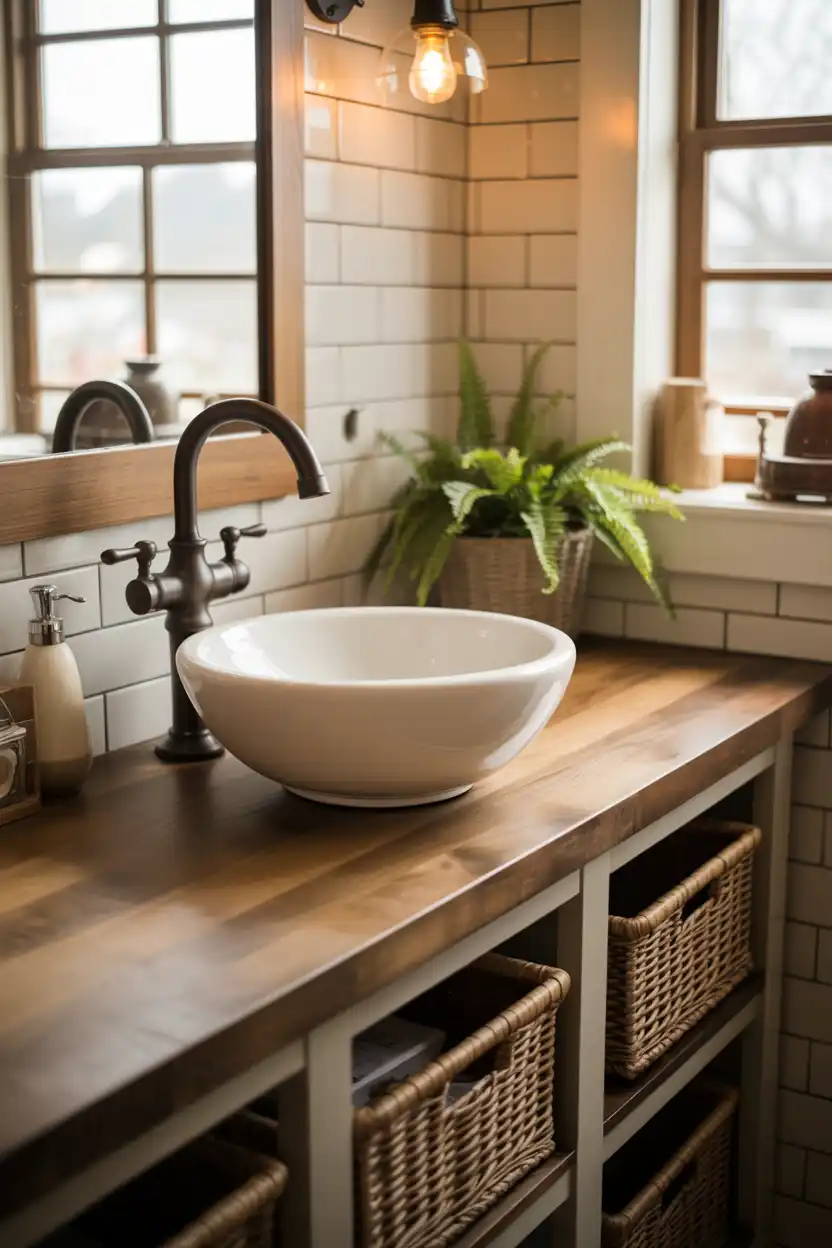
A butcher block counter brings warmth and organic texture that stone and quartz simply can’t replicate, making it a favorite for farmhouse, Scandinavian, and cottage-style bathrooms. The visible wood grain adds character that develops a rich patina over time.
Because wood and water don’t naturally mix, this style works best paired with a vessel sink that keeps standing water off the surface, along with a marine-grade sealant reapplied every six to twelve months.
It’s an especially good fit for powder rooms or secondary bathrooms with lighter daily use, and it’s one of the more budget-friendly upgrades on this list.
4. Concrete Floating Counter
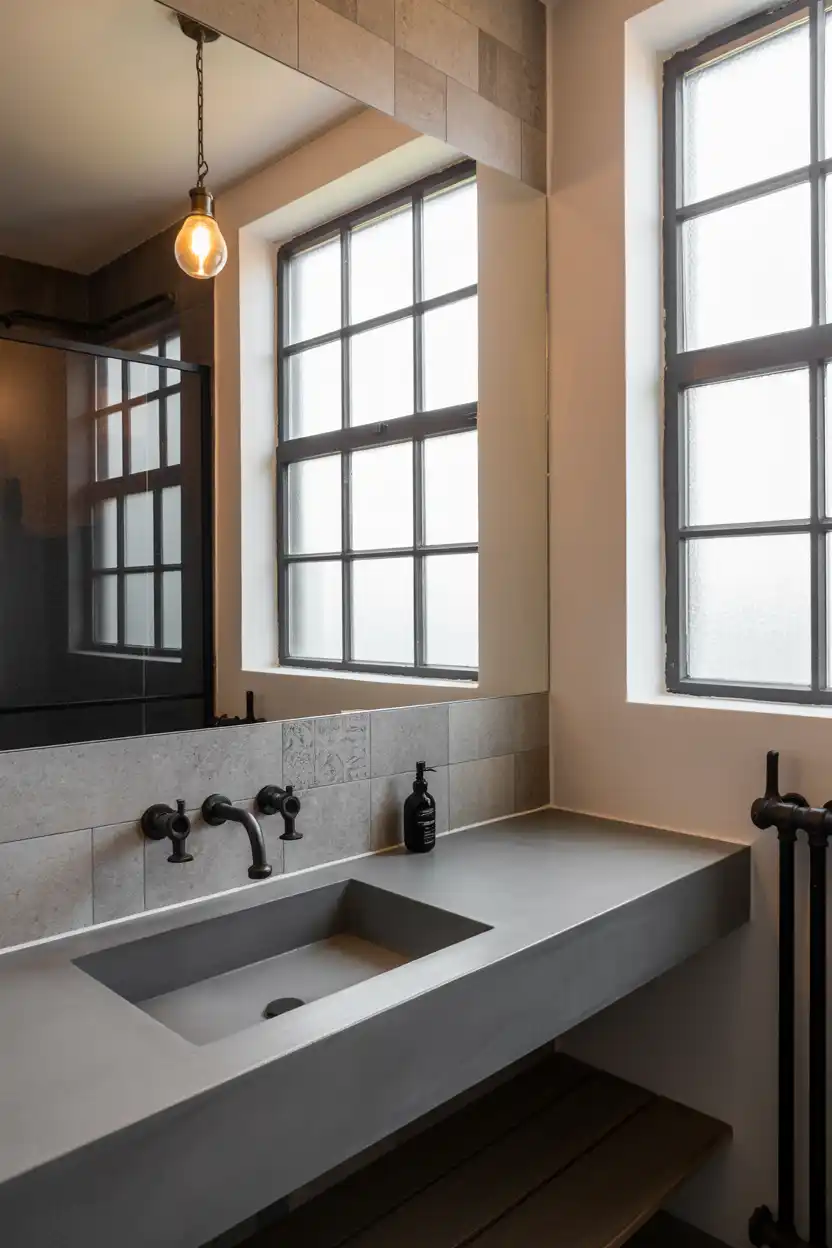
Concrete counters are hand-poured and fully customizable in shape, thickness, and edge profile, which makes them a favorite for loft-style and industrial-modern bathrooms where a one-of-a-kind silhouette matters.
Because each piece is cast on-site or in a mold, integrated sinks, drainboards, and unusual angles are all possible without visible seams. The tradeoff is that concrete can develop hairline cracks and needs a quality sealer to resist staining.
This option suits homeowners who want a fully custom, architectural look and are working with a fabricator experienced in concrete casting, since DIY results can be inconsistent.
5. Terrazzo Countertop
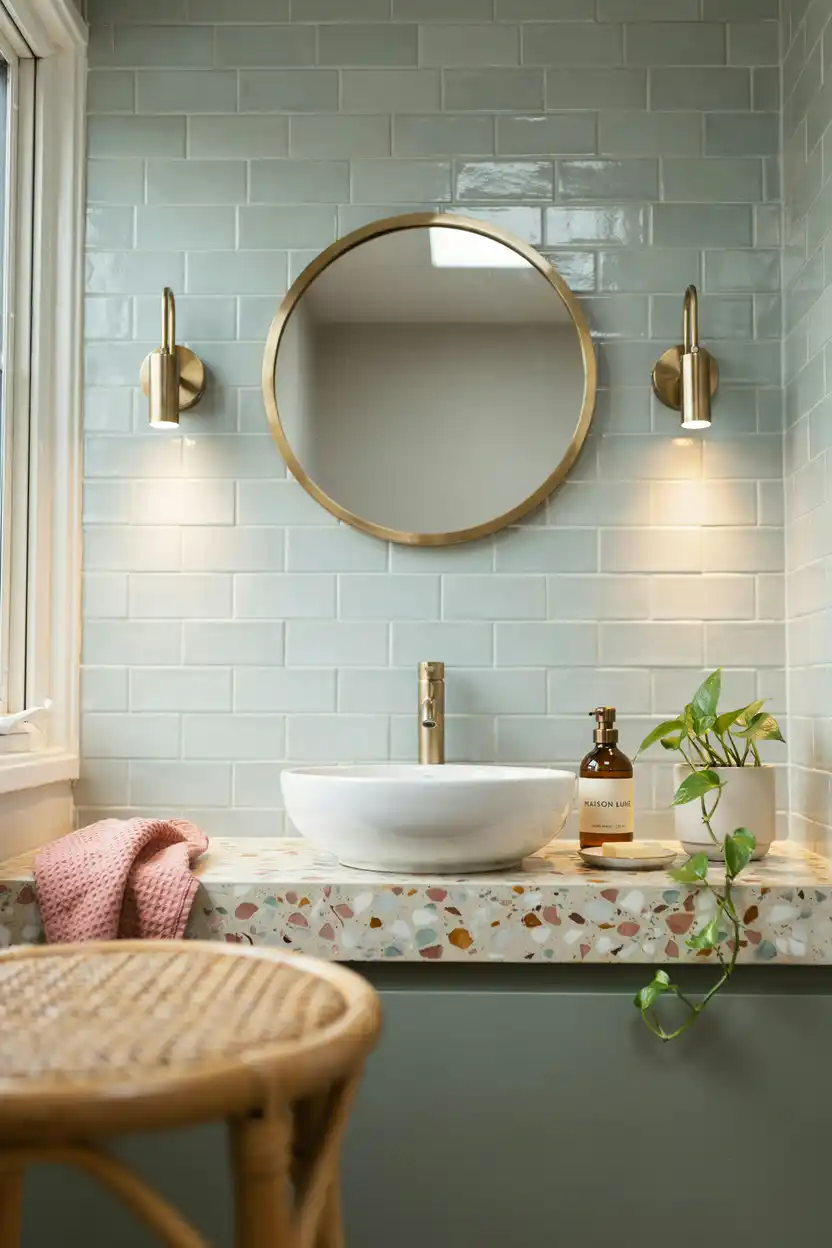
Terrazzo has moved from midcentury classic to modern favorite, combining chips of marble, quartz, or glass set into a resin or cement base for a speckled, confetti-like finish that pairs beautifully with bold color palettes.
As an engineered surface, terrazzo is durable, hides small stains within its pattern, and is easier to live with day-to-day than natural stone, though it still benefits from periodic sealing depending on the binder used.
It’s ideal for homeowners drawn to eclectic or maximalist design who want a countertop that doubles as a design statement rather than a neutral background.
6. Black Granite Counter
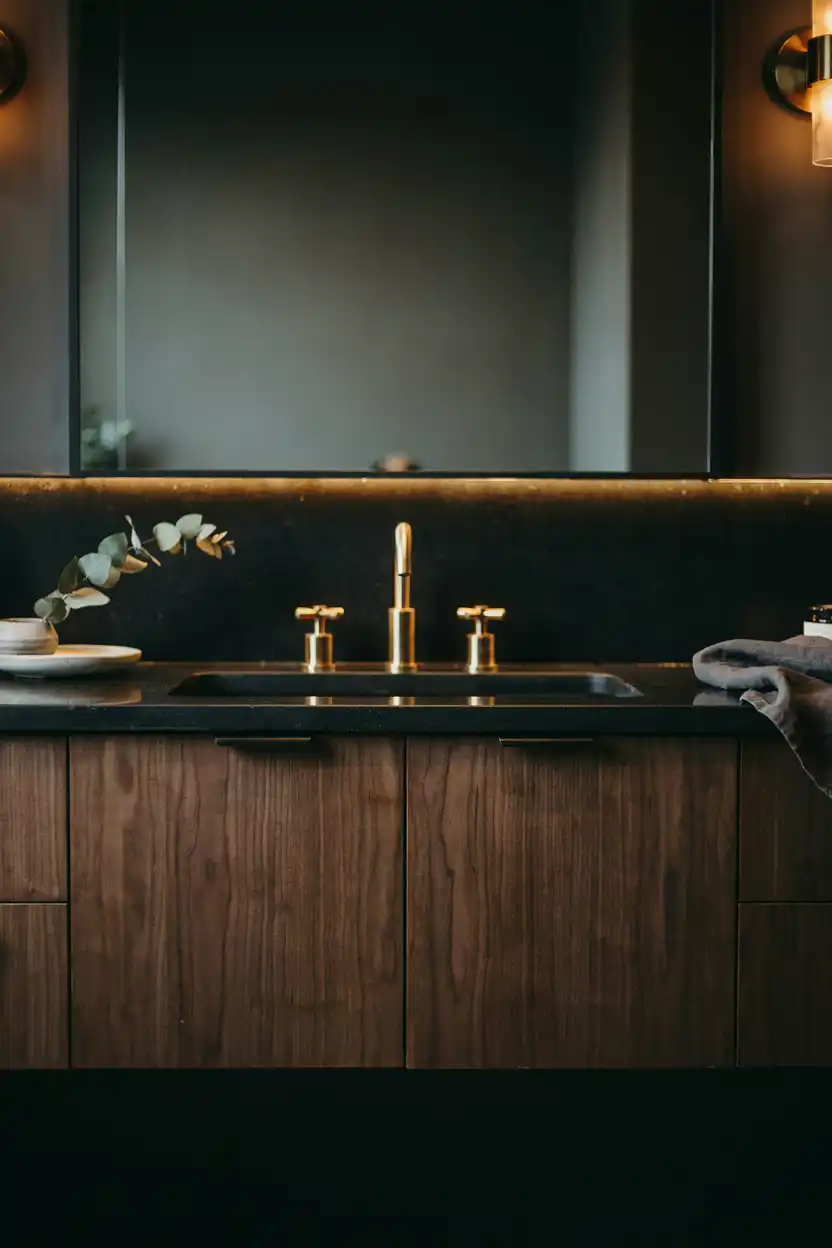
Black granite delivers a dramatic, saturated backdrop that makes brass or gold fixtures pop and gives even a small bathroom a sense of richness and depth.
Granite is one of the most heat- and scratch-resistant natural stones available, and its dark tone is forgiving when it comes to hiding water spots and minor everyday marks compared to lighter surfaces.
It’s a strong choice for anyone drawn to a bold, modern-luxury aesthetic, though as a natural stone it carries a higher price point and still benefits from sealing every one to two years.
7. Live-Edge Wood Slab with Vessel Sink
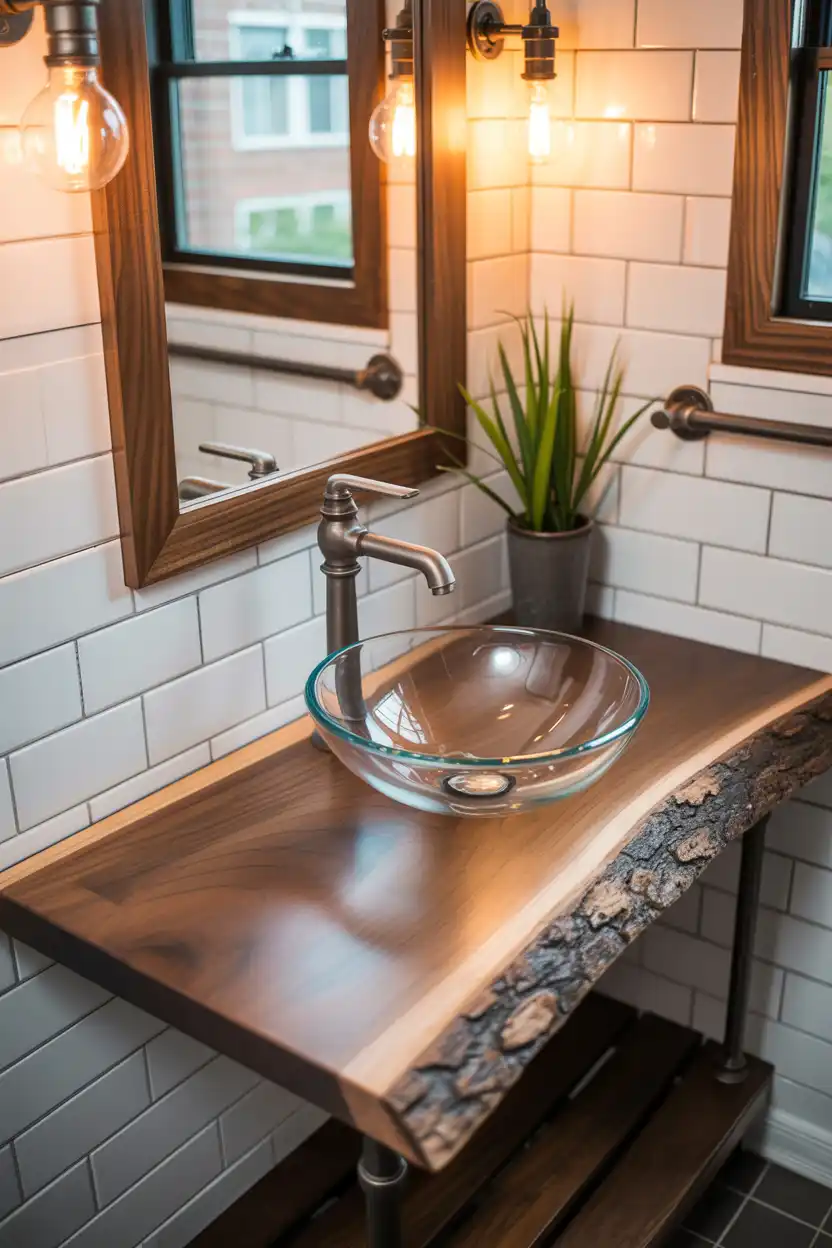
A live-edge slab keeps the natural, irregular contour of the tree intact, turning the countertop itself into the room’s focal point. Paired with a vessel sink, the wood’s raw edge and grain stay fully visible and untouched by plumbing cutouts.
Because the sink sits on top rather than being carved into the wood, moisture exposure is limited to splashes rather than standing water, which extends the life of the finish considerably.
This idea is best suited to cabin, rustic-modern, or nature-inspired bathrooms, and it works particularly well as a single-vanity statement piece rather than a long double-sink run.
8. Double Vanity with Quartz Top
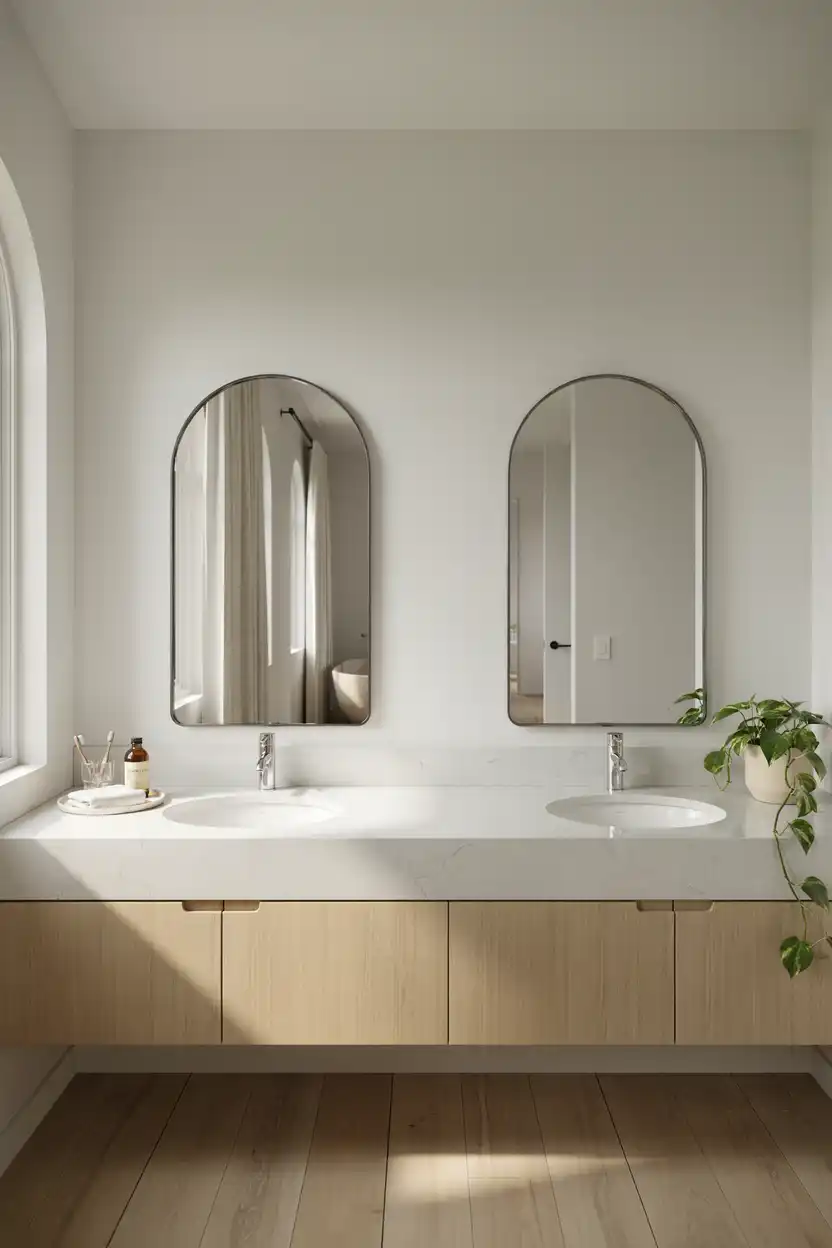
For shared primary bathrooms, a long quartz double-vanity top solves the daily traffic-jam problem while presenting a clean, uniform surface from end to end, since engineered quartz doesn’t have the veining mismatches natural stone slabs can show across a wide span.
The consistent color and pattern also make it easy to coordinate with cabinetry, backsplash tile, and hardware without worrying about slab variation.
It’s best suited to couples or families sharing a bathroom who want dedicated space and storage, and while the upfront cost is higher due to the larger slab size, it adds strong long-term resale value.
9. Floating Vanity with Under-Counter Lighting
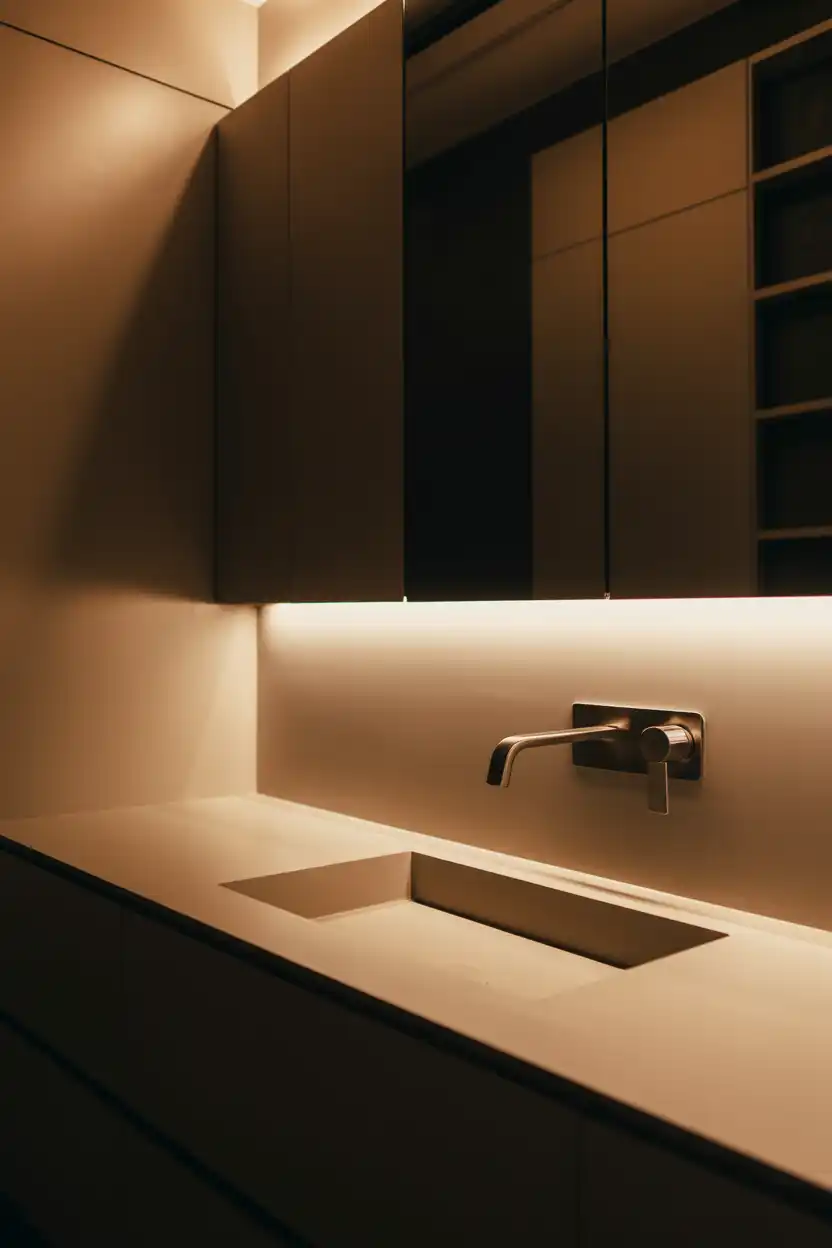
Mounting the vanity so it appears to float off the wall, then tucking a warm LED strip beneath the countertop, creates a soft glow that makes the whole room feel lighter, larger, and more contemporary, especially at night. The visual gap beneath the counter also makes cleaning the floor easier and gives small bathrooms a sense of extra square footage.
This is a great fit for modern, minimalist small bathrooms, though it does require an electrician to add a low-voltage line, which adds a modest amount to the installation cost.
10. Recycled Glass Countertop
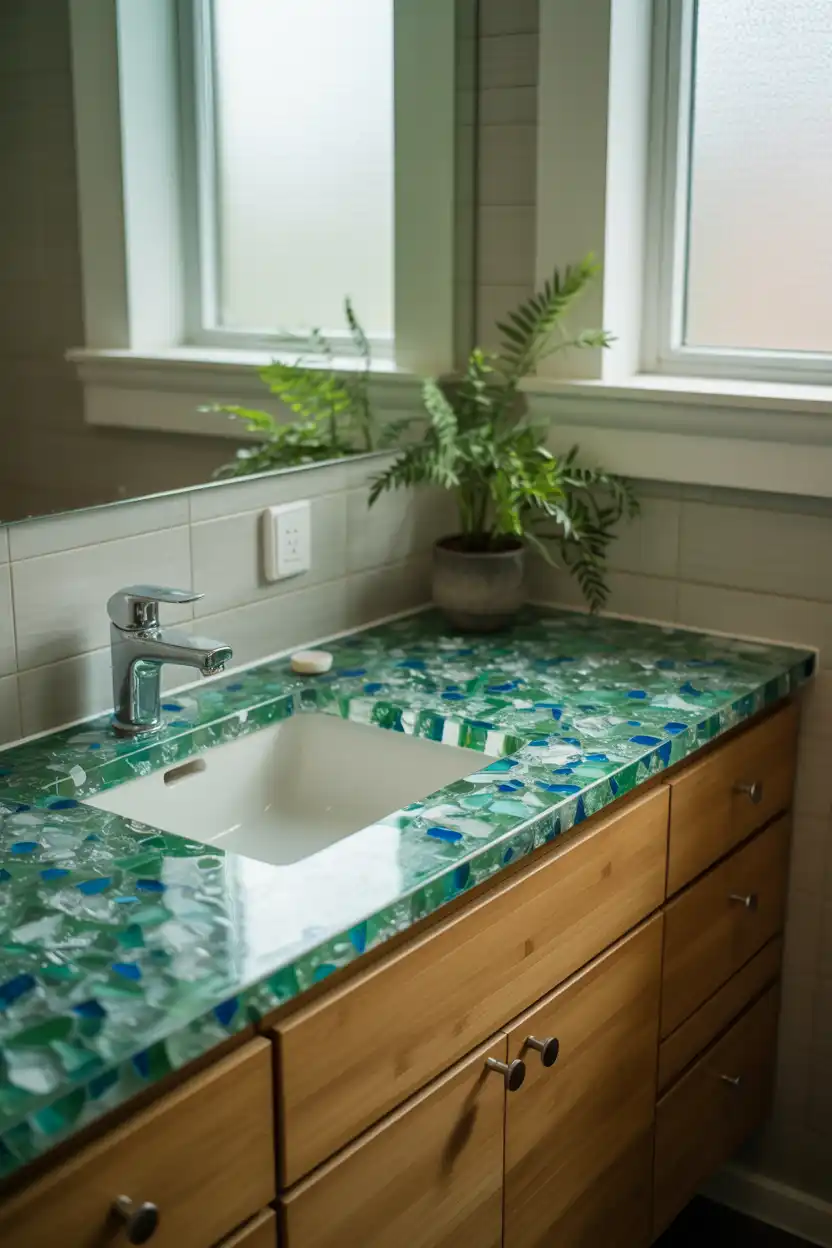
Recycled glass countertops embed reclaimed glass fragments in a resin or cement binder, producing a unique sparkle that catches light differently than stone. Every slab is different, so the finished look feels custom.
Like quartz, it’s nonporous and stands up well to daily use, making it an easy way to bring a genuinely sustainable material into the renovation without sacrificing durability. It suits sustainability-minded homeowners looking for something visually distinctive, and it’s typically priced in line with mid-range quartz.
11. Marble-Look Porcelain Slab
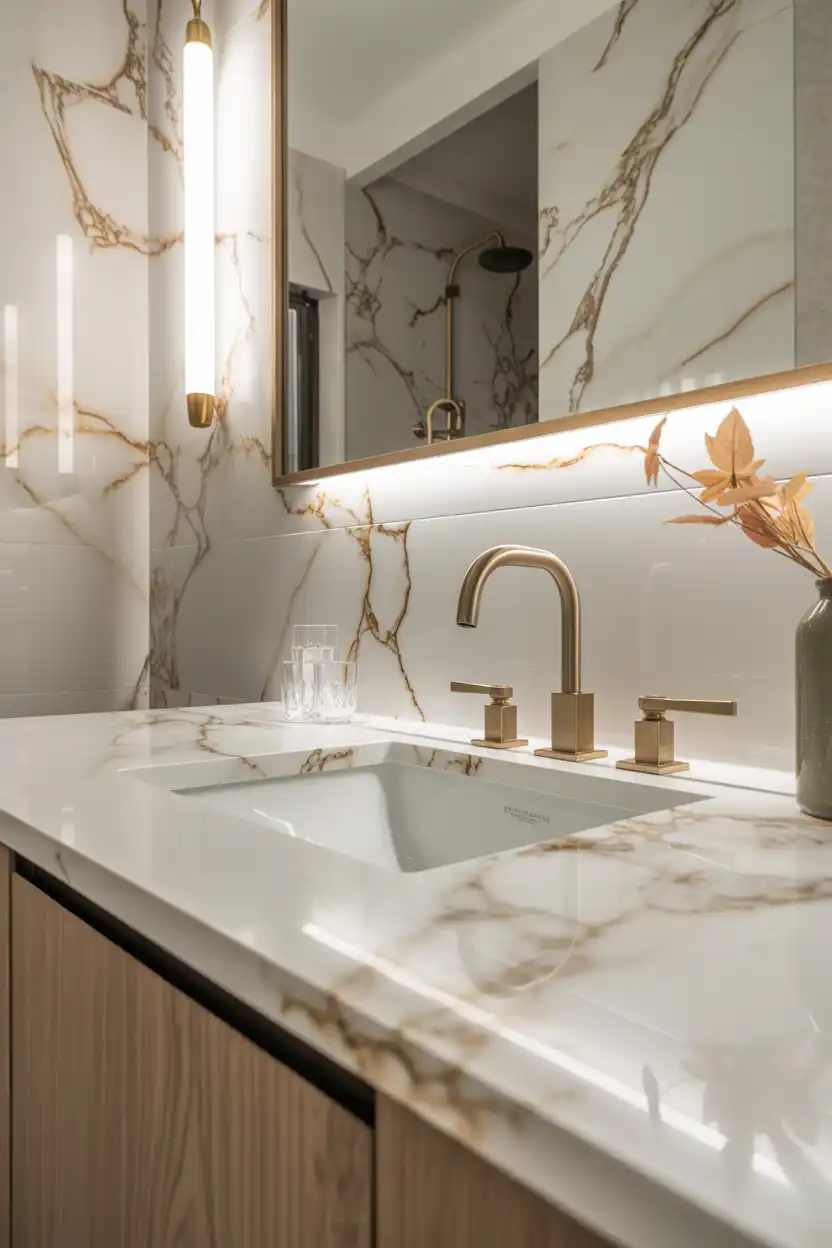
Porcelain slabs replicate the look of marble, from the color to the fine veining, using a manufacturing process that produces a surface far harder and more scratch- and stain-resistant than the real thing.
Because slabs come in large formats, a full vanity run can often be covered with a single piece, minimizing seams and giving a clean, high-end appearance.
This option is ideal for households that want a luxury marble look without the maintenance routine, and it’s a smart choice for busy families or rental properties where upkeep needs to stay minimal.
12. Copper Countertop
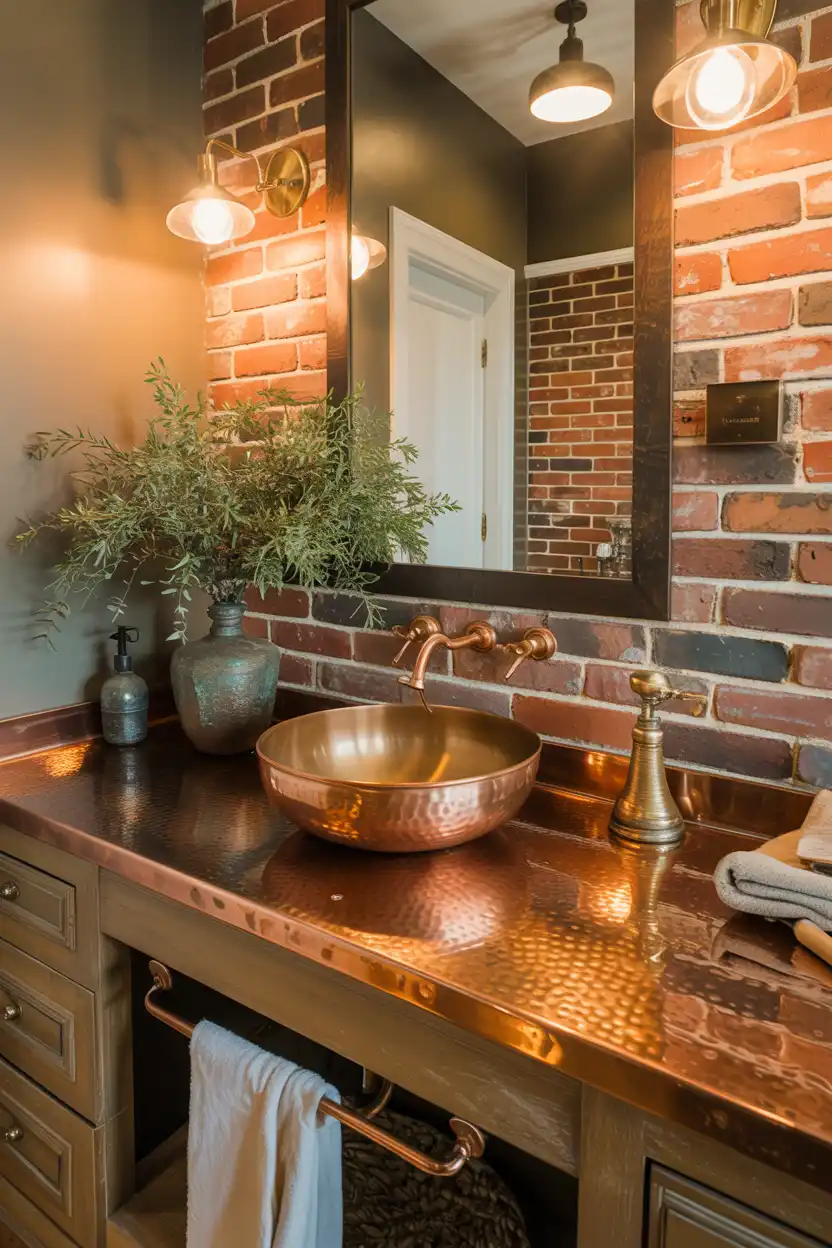
Copper is a living finish, meaning it changes color and develops a warm patina over time as it reacts with air, water, and use, so the countertop actually becomes more distinctive the longer it’s installed.
It’s also naturally antimicrobial, which is a practical bonus in a bathroom setting, though homeowners who want to preserve the bright, polished look will need to apply a protective wax periodically to slow the patina process.
This idea shines in eclectic, bohemian, or Southwestern-inspired bathrooms and works best as an accent piece rather than a large, high-traffic double vanity.
13. Solid Surface (Corian) Counter
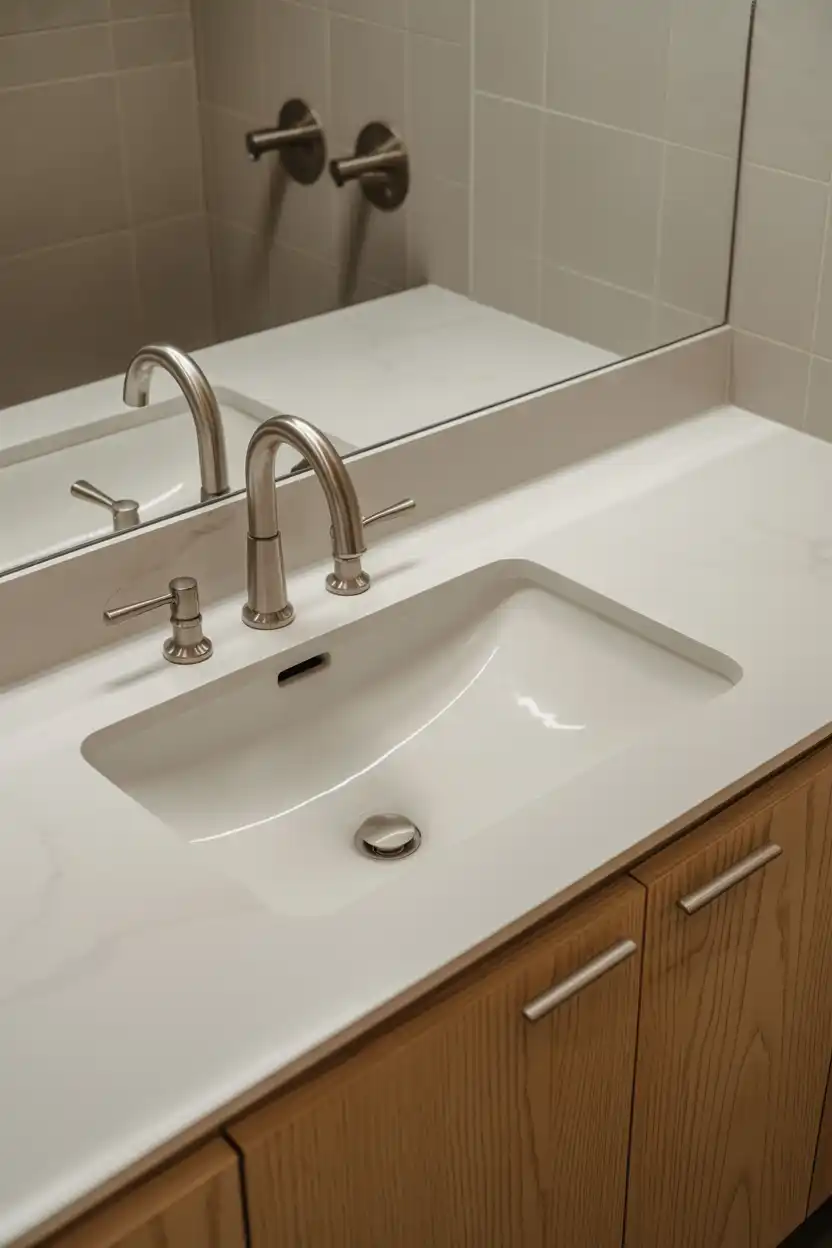
Solid surface material like Corian can be thermoformed and joined invisibly, allowing the countertop and sink to be molded as one continuous piece with zero seams for grime or water to collect in.
It’s nonporous, easy to clean with basic soap and water, and unlike stone, minor scratches or burns can often be sanded out rather than requiring a full replacement.
It’s a strong match for minimalist and contemporary bathrooms, and its smooth, seamless design also makes it a popular pick for accessible or universal-design bathrooms.
14. Reclaimed Wood Vanity Top
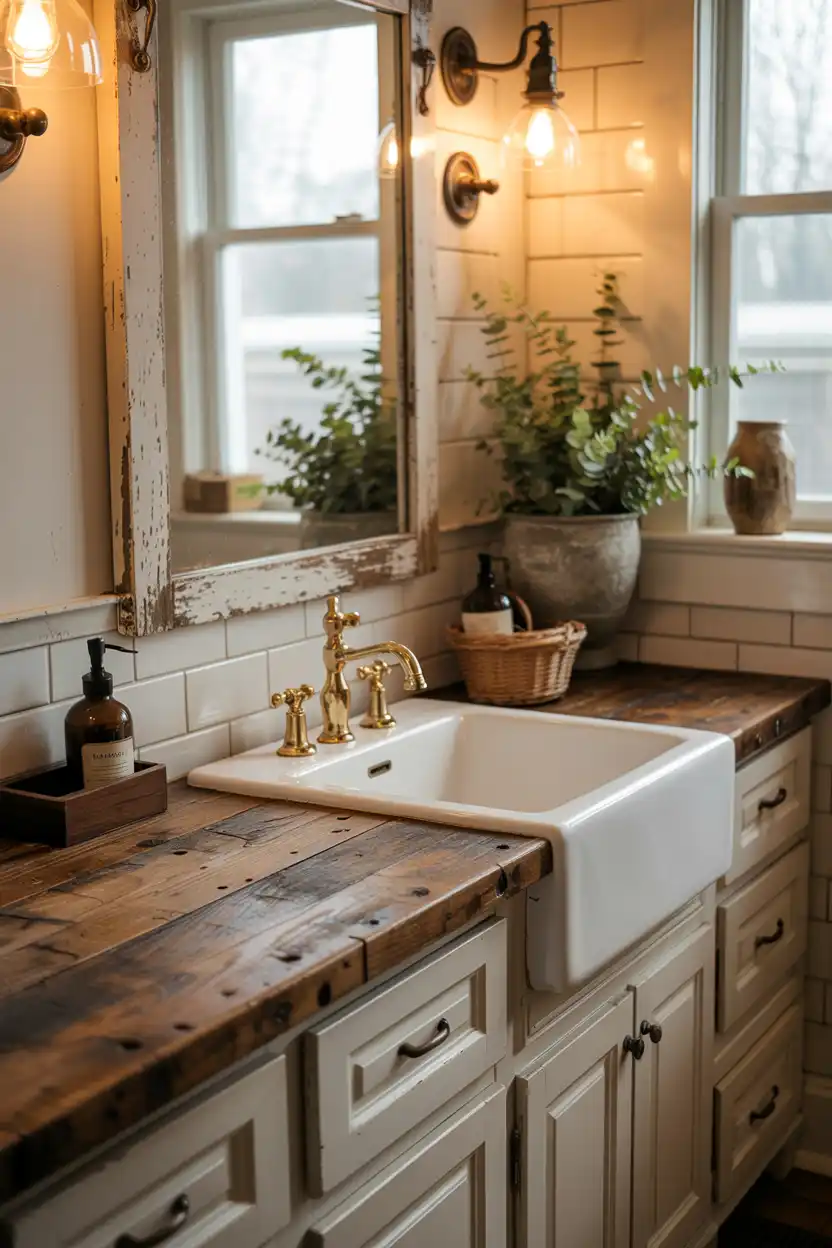
Reclaimed wood carries visible history, from nail holes to weathered grain, giving the bathroom a sense of character that new materials can’t fake. Every board tells a slightly different story, which is part of the appeal.
Sourcing reclaimed material is also one of the more sustainable choices on this list, since it repurposes wood rather than harvesting new timber, though it still needs a quality sealant to handle bathroom humidity.
It’s best suited to vintage, farmhouse, or eclectic interiors where a lived-in, storied look is the goal rather than a pristine, uniform finish.
15. Onyx Backlit Countertop
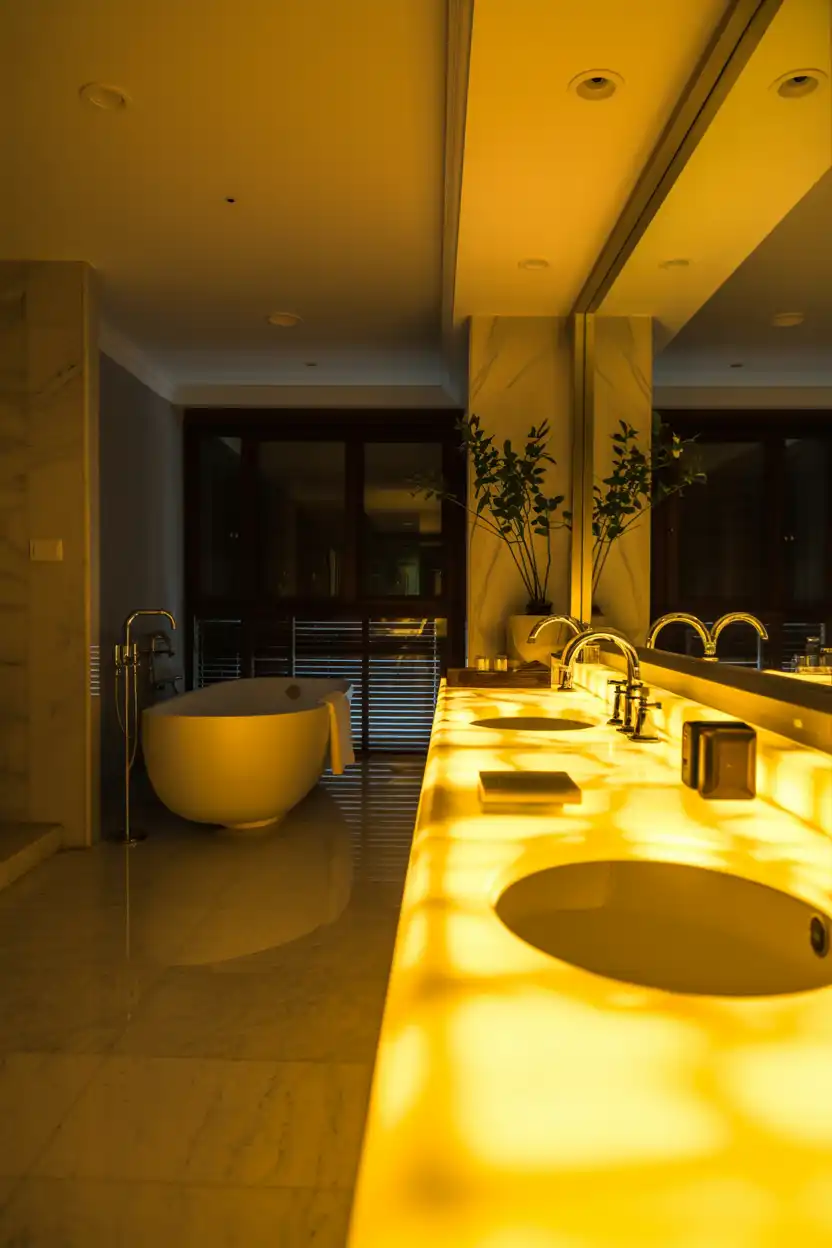
Onyx is semi-translucent, which means it can be backlit with LED panels to create a soft, glowing surface that feels closer to a lighting fixture than a countertop. The effect is dramatic and unmistakably high-end.
Because onyx is softer and more brittle than granite or marble, it requires careful fabrication, reinforced backing, and professional installation, and it’s more prone to chipping or cracking under heavy impact.
This idea is reserved for statement primary suites and spa-style bathrooms where budget allows for both the premium material and the electrical work needed for backlighting.
16. Small Bathroom Corner Counter
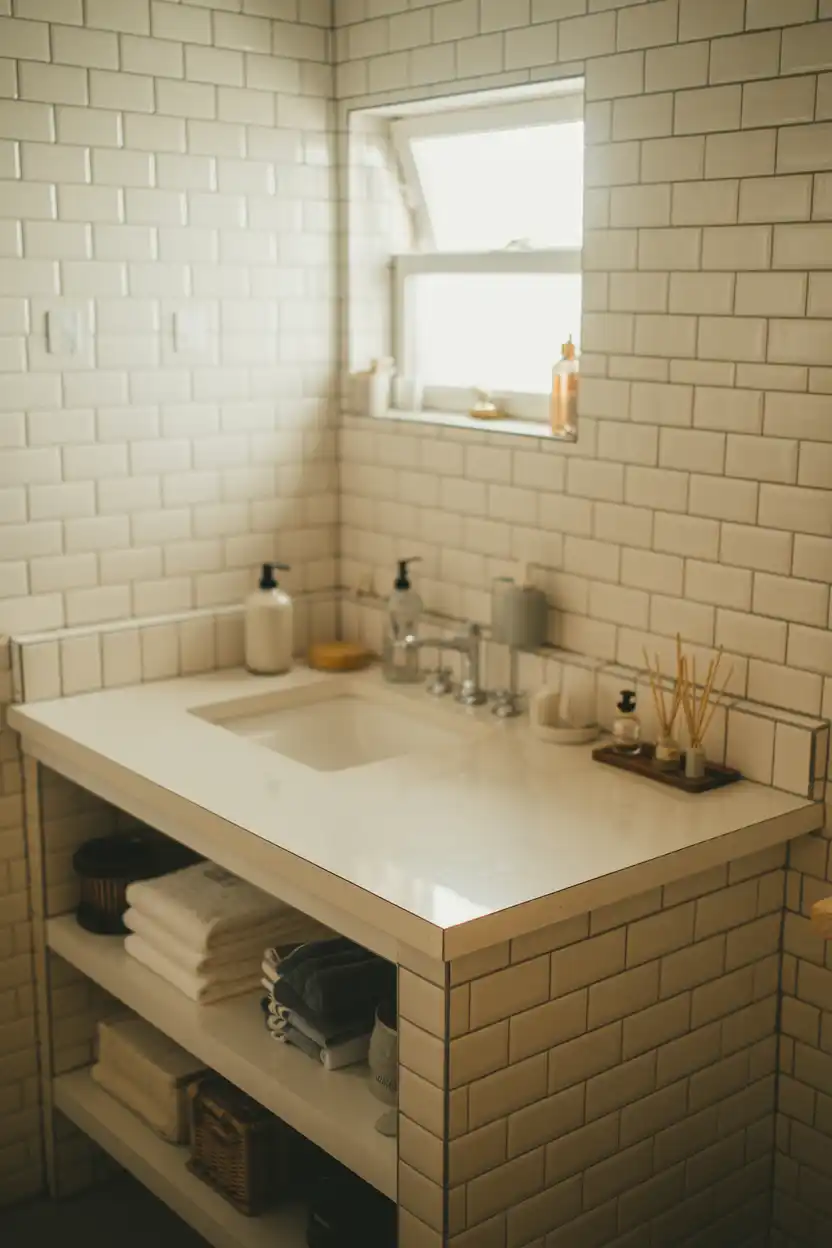
In tight bathrooms, a custom-cut corner countertop can turn an awkward, unused angle into functional counter space for daily essentials, without eating into the room’s walking area.
Because the footprint is small, this is one of the most affordable ways to upgrade a bathroom, since less material is needed even when choosing a premium surface like quartz or porcelain.
It’s particularly well-suited to apartments, powder rooms, and small guest bathrooms where every inch of layout has to be used efficiently.
17. Matte Black Quartz Counter
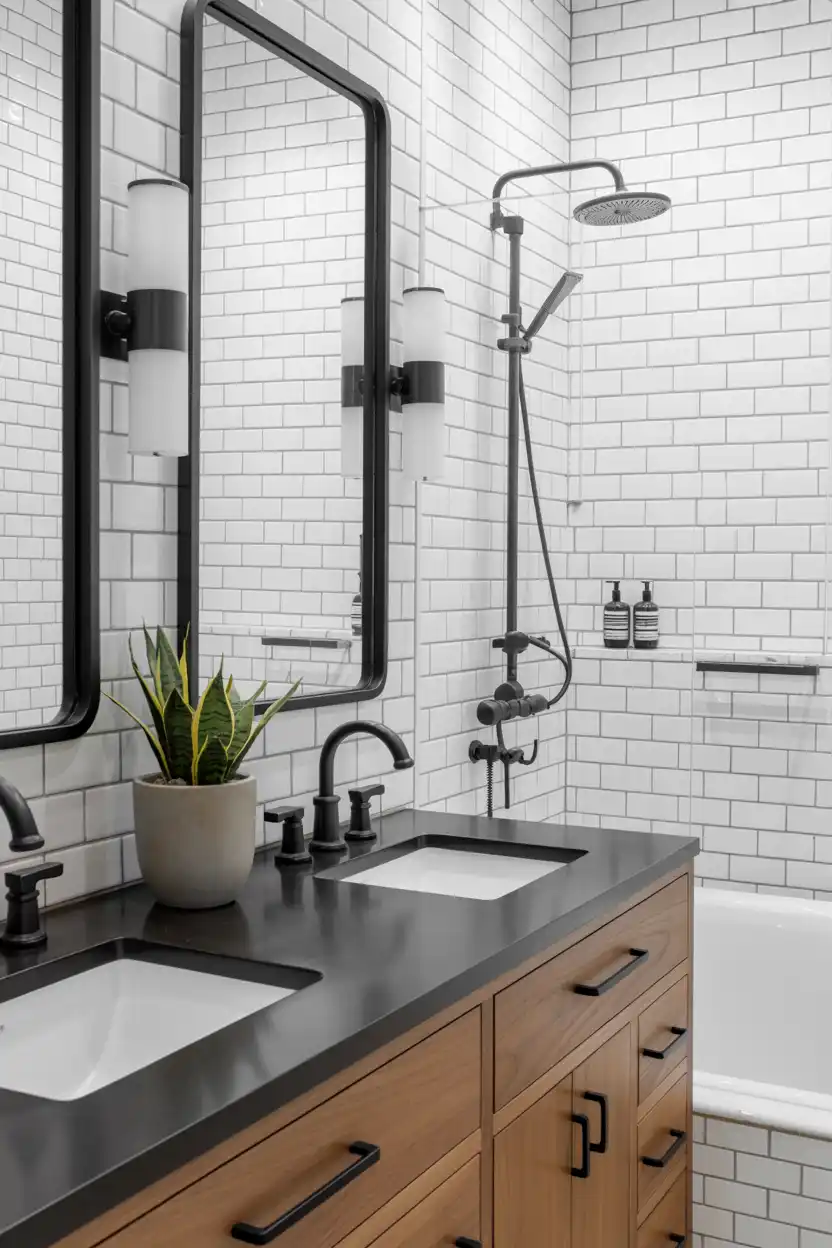
A matte black surface delivers strong contrast against white tile, wood tones, or brass fixtures, and the matte finish specifically resists fingerprints and water spots better than a glossy black surface would.
As engineered quartz, it maintains all the low-maintenance, nonporous benefits of standard quartz while giving the room a moodier, more contemporary edge.
This look works well for homeowners drawn to modern or moody design who still want the practicality of an easy-care surface for daily family use.
18. Two-Tone Vanity with Mixed Materials
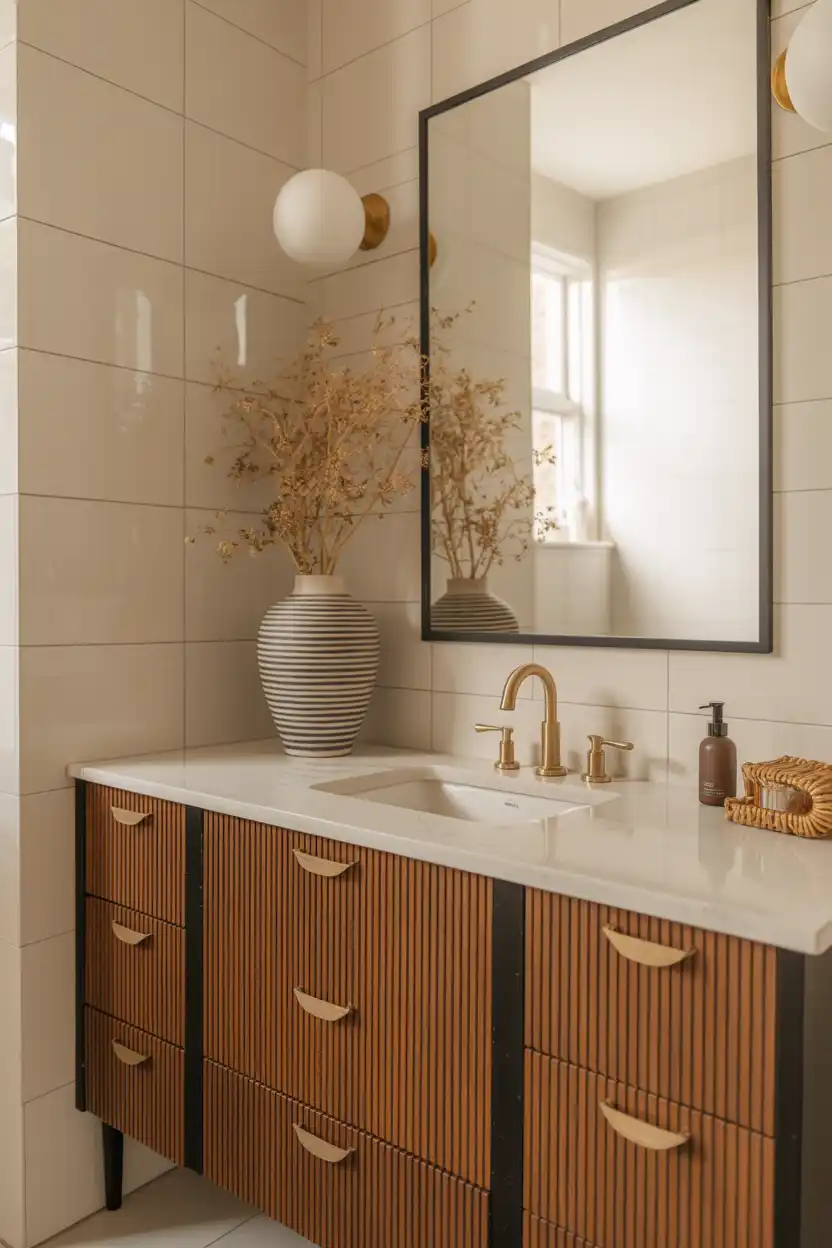
Mixing materials, such as a wood or painted cabinet base with a contrasting stone or quartz top, adds depth and a custom, designer feel without the cost of a fully bespoke build.
This approach also offers a practical budget lever: homeowners can splurge on a premium countertop while choosing a more affordable cabinet finish, or vice versa, and still land on a cohesive look.
It’s a great option for design-forward homeowners who want their vanity to feel like a furniture piece rather than a builder-grade fixture, as long as the tones and textures are chosen to complement the surrounding tile and hardware.
Planning and Buying Tips
Before you order any material, a few practical details will determine what actually fits your bathroom and how smoothly installation goes.
• Measure your existing vanity cabinet precisely; standard depth runs 20-22 inches with a 1-1.5 inch front overhang
• Decide on sink style first (undermount, vessel, or integrated), since it determines the countertop cutout and edge treatment
• For floating vanities or floating countertops, confirm the wall can support the load with proper blocking or brackets
• Check that plumbing rough-in locations align with your new sink placement, or budget for a plumber to relocate them
• In humid climates or poorly ventilated bathrooms, favor moisture-resistant materials like quartz or porcelain over wood or concrete
• Standard comfortable vanity height runs 32-36 inches; taller counters reduce back strain for adults
• Hire a licensed fabricator or installer for any natural stone or concrete slab; these materials are heavy and require precise templating
• Order roughly 10 percent extra material to account for edge profiles, seams, and cutting waste
• Plan for a 2-4 week fabrication lead time on custom stone or quartz slabs before installation can be scheduled
Cost Breakdown
Bathroom countertop pricing varies widely depending on material, size, edge detail, and whether you tackle installation yourself. Here’s a realistic range across three tiers.
Budget: $150-$600
Covers laminate, prefabricated solid-surface remnants, and small vanity tops for powder rooms or corner installations. Many budget options can be self-installed, keeping labor costs minimal.
Mid-Range: $600-$2,000
Covers standard quartz, granite, and marble-look porcelain for an average single or double vanity. Professional installation typically adds $300-$800 to this range, including sink cutouts and templating.
Luxury / Premium: $2,000-$6,000+
Covers natural marble slabs, backlit onyx, custom waterfall edges, and copper. These materials require specialized fabrication and installation, which can add $800-$2,000 or more depending on complexity and material fragility.
Materials Comparison
| Material | Price / Sq Ft | Durability | Maintenance | Best For |
| Laminate | $10-40 | Low-Medium | Low | Budget renovations, rentals |
| Solid Surface (Corian) | $40-80 | Medium | Low | Seamless integrated sinks |
| Quartz (Engineered) | $50-100 | High | Low | Busy households, modern look |
| Granite | $50-100 | High | Medium | Natural stone lovers |
| Marble | $60-150 | Medium | High | Classic, elegant primary baths |
| Porcelain Slab | $50-100 | Very High | Low | Marble look, low upkeep |
| Butcher Block Wood | $30-70 | Medium | High | Farmhouse and rustic style |
| Concrete | $65-135 | High | Medium | Custom industrial designs |
| Terrazzo | $60-120 | High | Low | Colorful, playful spaces |
| Copper | $100-200 | Medium | High | Eclectic statement pieces |
| Onyx | $150-250+ | Low-Medium | High | Luxury spa-style suites |
Maintenance Tips
• Wipe down daily with mild soap and warm water; avoid abrasive scrub pads on matte or honed finishes
• Reseal natural stone (marble, granite) and porous surfaces like concrete or wood every 6-12 months
• Skip citrus- or vinegar-based cleaners on marble and onyx, since acid causes etching and dulls the polish
• Dry standing water off wood and copper surfaces promptly to prevent warping or uneven patina
• Recaulk the seam around undermount sinks annually to prevent water from seeping beneath the countertop
• Use trivets under hot styling tools; even heat-resistant materials like quartz can discolor with prolonged direct heat
• For copper, apply a protective wax periodically if you want to slow, rather than showcase, the natural patina process
Frequently Asked Questions
What is the most durable bathroom countertop material?
Engineered quartz is generally considered the most durable everyday option because it’s nonporous, resists scratches and stains, and never needs sealing. Porcelain slabs are also extremely durable and hold up well against heat and impact.
How much does it cost to replace a bathroom countertop?
Most homeowners spend between $600 and $2,000 for a mid-range material like quartz or granite, including professional installation. Budget laminate options can run as low as $150-$600, while premium materials such as marble or onyx can exceed $6,000.
Is granite or quartz better for bathroom counters?
Quartz requires less maintenance since it never needs sealing and resists stains more consistently, making it a better fit for busy households. Granite offers more natural variation and slightly better heat resistance, but it needs periodic resealing to stay stain-resistant.
What countertop is best for a small bathroom?
A custom-cut corner countertop or a compact quartz or solid-surface top works best in small bathrooms because it maximizes limited space without unnecessary material cost. Light colors and seamlessly integrated sinks also help a small counter feel larger.
Do bathroom countertops need to be sealed?
Porous natural materials like marble, granite, concrete, and wood need sealing, typically every 6-12 months, to resist stains and water damage. Engineered surfaces like quartz, solid surface, and porcelain are nonporous and never require sealing.
How to Choose the Right Bathroom Counter Ideas for You
The right countertop comes down to matching the material to how the space actually gets used. In a tight powder room or small guest bath, a corner-fit quartz or budget solid-surface top delivers a clean upgrade without wasted material or cost. For a busy family or shared primary bathroom, low-maintenance engineered materials like quartz or porcelain hold up to daily wear far better than natural stone. And if the bathroom is meant to feel like a retreat, materials like marble, onyx, or a waterfall quartz edge create a spa-like statement worth the extra investment and upkeep. Weigh your space, your budget, and how much maintenance you’re realistically willing to do, then pick the idea from this list that fits all three.
Ready to bring one of these ideas into your own bathroom? Start by measuring your vanity and requesting quotes from two or three local fabricators so you can compare pricing before you commit.




- Be Respectful
- Stay Relevant
- Stay Positive
- True Feedback
- Encourage Discussion
- Avoid Spamming
- No Fake News
- Don't Copy-Paste
- No Personal Attacks
- Be Respectful
- Stay Relevant
- Stay Positive
- True Feedback
- Encourage Discussion
- Avoid Spamming
- No Fake News
- Don't Copy-Paste
- No Personal Attacks
